
asslam-o-alaikum
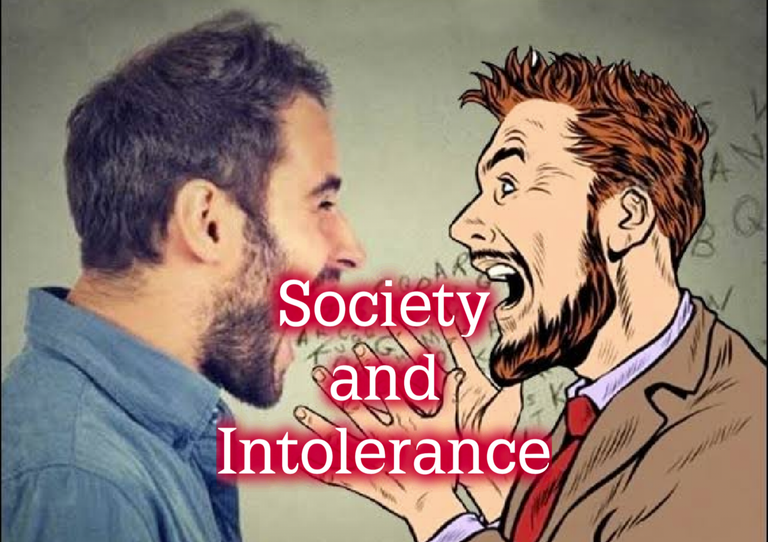
- Intolerance is growing at an alarming rate in our society. From homes to the halls of power, there is a severe crisis of tolerance. It has become normal to fight with each other over small things in homes. Families get separated from each other over trivial matters and do not like to see each other for years
Just enough! Now a solution has to be found. It can't go on like this anymore. Intolerance can no longer be tolerated. Yes, tolerating intolerance means we are allowing this disease to flourish. According to Karl Popper's research, in order to maintain its tolerance, any society must end its acceptance of intolerant behavior.
When a society begins to accept intolerant behavior, over time that society loses tolerance. For example, if you see a person with a car on the road, who is beating a poor rickshaw puller badly, then you will know that the precious vehicle of this poor person has suffered minor damage due to the negligence of the rickshaw puller.
So we will accept the bad behavior of the car owner very comfortably. According to Karl Popper, the philosophy of intolerance must be countered with rational argument. If this is insufficient, force should be used against him.

This is actually the principle behind the rapidly disappearing tolerance in our society. Both the hitter and the hitter are mentally prepared for certain occasions. For example, if the child has not done his homework, he is mentally prepared that the teacher has only to hit him and the teacher also has no other punishment except hitting him.
The most painful aspect of this whole situation is that we have mentally accepted this behavior. According to Karl Opp, this acceptance is what actually makes this disease incurable.
The members living in every society have different personalities. Some people are very emotional by nature and it is very difficult for them to control their anger in any situation. Not by mind, but only by mind.
When these two attitudes come face-to-face, it is quite possible that a person with negative feelings can destroy the tolerance in a positive thinking person with his negative attitude and as a result, the virus of intolerance spreads like an infectious disease. Others seem to engulf the entire society.
This infectious disease has spread in Pakistani society to such an extent that you will see its symptoms. From the television screen to real-life scenes and from the pages of newspapers to electronic pages, you will be exposed to rude and rude conversations.
Hardly a day goes by, when you don't witness such an emotional display during your road trip. Everyone will be busy trying to keep the traffic rules aside and if any other vehicle is touched in this attempt, both people will stop in the middle of the road and start taking out the funeral procession.
- Discrimination and intolerance are intertwined concepts that significantly impact our societies. Let’s delve into their meanings:
Discrimination:
Discrimination occurs when people are treated less favorably than others in a comparable situation solely because they belong to a certain group or category. These grounds can include age, disability, ethnicity, origin, political belief, race, religion, sex or gender, sexual orientation, language, culture, and more1.
It is a pervasive form of human rights violation, affecting millions of people daily. However, recognizing discrimination can be challenging because it takes various forms and expressions.
Imagine a world where everyone is treated fairly, regardless of their background or identity. That’s the goal we strive for.
Intolerance:
Intolerance reflects a lack of respect for practices or beliefs other than one’s own. It involves rejecting people perceived as differentwhether due to social, ethnic, political, or sexual orientation.
Intolerance manifests in actions ranging from avoidance and hate speech to physical harm or even murder.
As a society, we must actively combat intolerance by fostering understanding, empathy, and acceptance.
Remember, a tolerant society is one that acknowledges diversity, respects individual rights, and stands against discrimination and intolerance. Let’s work together to create a world where everyone feels valued and included
Intolerance breeds separation, misunderstanding, and hostility between groups. When groups have no opportunity to settle their disagreements by discussion, they are apt to resort to fighting. Intolerance therefore plays a leading part in fostering civic disorders, and especially in fostering revolution
4 Tips for Building Tolerance for Others
- Tolerance isn’t easy. Because we rely so heavily on our own experiences and worldview, it can be hard to see things from another person’s perspective or accept that someone else’s viewpoint may be equally valid with ours. But tolerance is a skill that can bring greater peace and harmony to our lives and the lives of others. Here are 4 tips for building tolerance for others.
Take Ownership of Your Feelings
- Recognize that no one can make you feel a certain way without your permission. If you’re feeling angry, hurt, or upset, know that you have the power to change your emotions. Move from an attitude of “this person upset me” to “I’m feeling upset because of something this person said or did, but I don’t have to stay that way. I have the power to choose my reactions.”
Develop Curiosity
- In many cases, when we lack tolerance towards others it’s simply because we don’t understand them. By cultivating an open mind, learning about other cultures and people, and broadening our horizons, we increase our ability to understand and accept others.
Change Your Perspective
- Sometimes hurt feelings or a lack of tolerance come about because we can’t see where the other person is coming from. You may not be able to fully understand another person’s experiences, but you can shift your perspective from yourself, (“I can’t believe that person was so rude to me”) to them and how you can relate (“Maybe they’re having a hard time right now. I know I sometimes say things I don’t mean when life is getting me down.”)
Practice Respect
When you don’t agree with another person’s opinion, focus on respecting their right to think for themselves and to believe what they choose. Just as we would never want that right taken away from us, we have a responsibility to extend that same courtesy to other people and treat others with respect, even when we disagree with them.
As you work to develop greater tolerance in your own life, you’ll find that you are happier, more at peace with yourself and those around you, and have a greater appreciation for diversity. Building tolerance for others is a lifelong pursuit that will continue to empower and bring healing—both to you, and to the society in which you live

 76.666 SRY