
Fundamental Exegesis of Molecular Evaporation
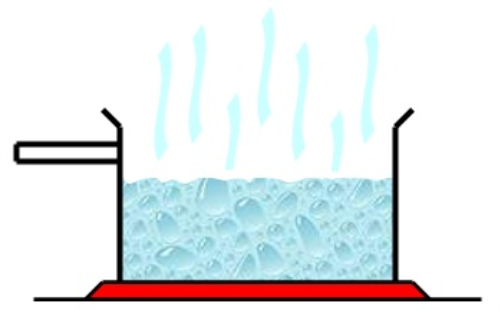
The process where a liquid turns spontaneously into vapour is known as evaporation. It has no pattern and occurs in no order so long the required factors are present in the system.
[Wikimedia](https://commons.wikimedia.org/wiki/File:Vaporisation.png)
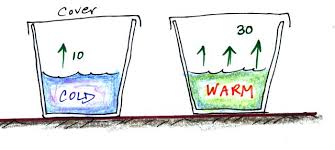
According to the kinetic theory of matter, a fluid consists of molecules constantly in motion. The velocity and kinetic energy depend on the temperature of the liquid. Actually, they are proportional, therefore an increase in temperature is a corresponding increase in the kinetic energy as well. Temperature is one of the key factors that affect the rate of evaporation.
.jpeg)
[atmo.arizona](http://www.atmo.arizona.edu/students/courselinks/spring08/atmo336s1/courses/spring18/atmo170a1s1/lecture_notes/humidity/saturation_figs/)
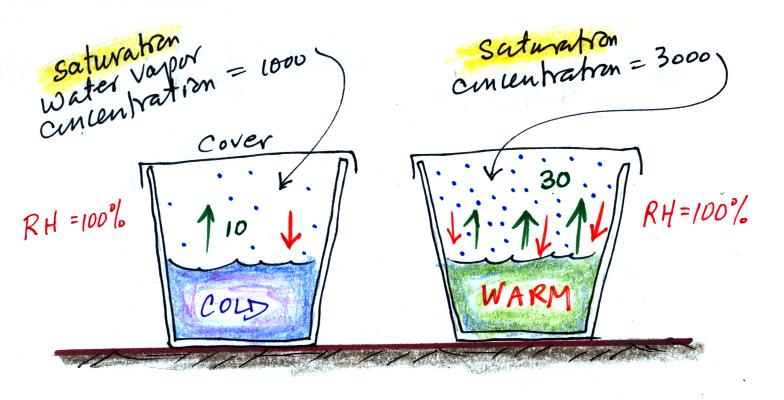
Molecules with high speeds at the surface of the liquid have enough kinetic energy to overcome the attractive force of the other molecules within the fluid and move outside as vapour. Some of these molecules stay outside while others, however, return to the liquid. As more molecules leave the liquid surface beyond those returning, it evaporates more and more. High temperatures increase the velocities of all the molecules, thus allowing more molecules to escape from the surface.
Other factors the increase the rate of evaporation is
* decrease in pressure. Low pressure favours evaporation, this is utilized in pressure pots.
* dryness and high wind speed. A dryer atmosphere would have a higher rate of evaporation than the humid one.
* low boiling point. This depends on the nature of the liquid. Low B.P means low KE needed to be attained to escape.
* High surface area of the liquid. A higher surface area means a higher number of surface molecules to escape.
The coolest fact about evaporation is that unlike boiling which takes place at only boiling point, it takes place at any temperature. Which means even at 0°C molecules can escape from the liquid but won't be enough to cause the liquid to evaporate since the returning molecules are way more than those escaping.
[atmo.arizona](http://www.atmo.arizona.edu/students/courselinks/spring08/atmo336s1/courses/spring18/atmo170a1s1/lecture_notes/humidity/saturation_figs/)
Reference
Wikipedia
School Physics, 2016 revised edition.

 0.000 SRY