
FUNGI
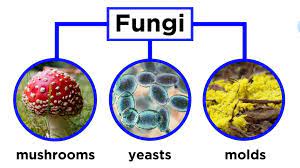
Fungi are simple organisms that can be single or multicellular. They cannot make their own food as fungal cells don’t have chlorophyll. They often grow on dead bodies and decaying matter. A typical fungal cell contains a true nucleus, mitochondria, endoplasmic reticulum and apparatus. They have thick walls. The organism body consist of filament is called hyphae. Fungi reproduce by means of spores. Yeast, mould, mushroom, etc. are example of fungi.
PRARASITES
The organisms that live in or on the body of other organisms are called parasites. The organism on which parasites live are called host. Parasites obtain food from the hosts. The two main types of parasites which cause disease in human are endoparasites and ectoparasites. The parasites that the body of host (most commonly in blood stream) are called endoparasites. Malarial parasites, tape worm, round worm, etc are the example of endoparasites. The parasites that live outside the bodies of the host are called ectoparasites. Insect, such as ticks, lice and mosquitoes that can live inside as well as outside the human body.

 91.656 SRY