
Draft sub-decree aims to regulate commercial use of water sources
Synopsis: The sub-decree on water licences will serve as a critical legal instrument for implementing the Law on Water Resources Management and the Environment and Natural Resources Code in the country.
The Ministry of Water Resources and Meteorology (MOWRAM) Friday discussed efforts to strengthen the Kingdom’s legal framework for water resource management, with a renewed focus on driving sustainable economic growth alongside helping to build investor confidence in water-dependent sectors.
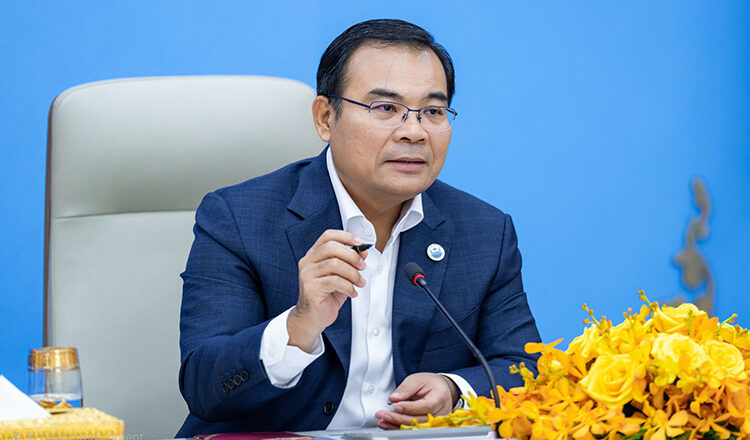
The draft sub-decree was initiated by Thor Chetha, Minister of Water Resources and Meteorology, during an internal meeting to review, discuss, and consult on its content, especially on the provision of water licences.
The meeting was attended by Chann Sinath, Secretary of State at MOWRAM, subject experts and civil servants from different ministries and provincial departments, along with representatives of the Cambodian Mekong River National Committee, and the Tonle Sap Authority at the Ministry Conference Hall last week.
Speaking at the meeting, Chetha highlighted that the sub-decree on water licences will serve as a critical legal instrument for implementing the Law on Water Resources Management in the Kingdom of Cambodia, and the Environment and Natural Resources Code.
He emphasised that the legal framework is essential for enhancing transparency, equity, and economic efficiency in water usage—a growing concern as Cambodia balances development with environmental conservation.
According to the minister, the draft sub-decree is designed to achieve three key objectives: first, to provide legal rights to individuals and enterprises to access and use water resources equitably and in an environmentally responsible manner; second, to enable the ministry to collect accurate water usage data to support national water planning and long-term sustainability; and third, to support Cambodia’s economic growth through a fair pricing mechanism for the commercial use of public water sources.
The sub-decree is expected to be particularly significant for sectors such as agriculture, hydropower, industry, and tourism, all of which rely heavily on water access, the ministry said in a statement issued on Friday.
By establishing a clear licensing system and a defined structure for water pricing, the sub-decree aims to reduce risks for private investors and promote responsible water use among businesses operating in rural and urban areas alike, the statement added.
In his remarks, Chetha reiterated the government’s commitment to balancing economic development with natural resource sustainability.
He encouraged inter-agency coordination to finalise the legal text in line with the ministry’s broader agenda to improve governance and institutional accountability in water management.
In 2023, the ministry decided to form a committee and sub-committee tasked with drafting and updating laws, policies, master plans, strategic plans, and legal documents aimed at reinforcing the legislative functions.
The draft sub-decree on water licences comprises 11 chapters and 27 articles, covering provisions from licensing conditions to enforcement and dispute resolution.
Separately, the Royal Government has initiated a draft law on inland water transport, comprising 18 chapters and 275 articles, aiming to manage and develop the country’s waterway and seaport sector.
Its primary objectives include maintaining order, ensuring safety and security in inland waterway transport, constructing and contributing to environmental protection.
The law aims to provide investment opportunities, promote fair competition, uphold equity and transparency.

 8.601 SRY