
An equipment manufacturer prepares one product demonstration for distributors who prefer Hindi, Tamil, and Telugu. The footage clearly shows how the machine operates, but an awkwardly translated narration could confuse component names, measurements and operating steps. Professional multilingual voice-over recording connects accurate technical scripts with voices suited to each audience and carefully timed visuals. For B2B buyers assessing specifications or workflows, a clear explanation matters more than dramatic delivery. Recording quality and subject review therefore deserve attention from the start.
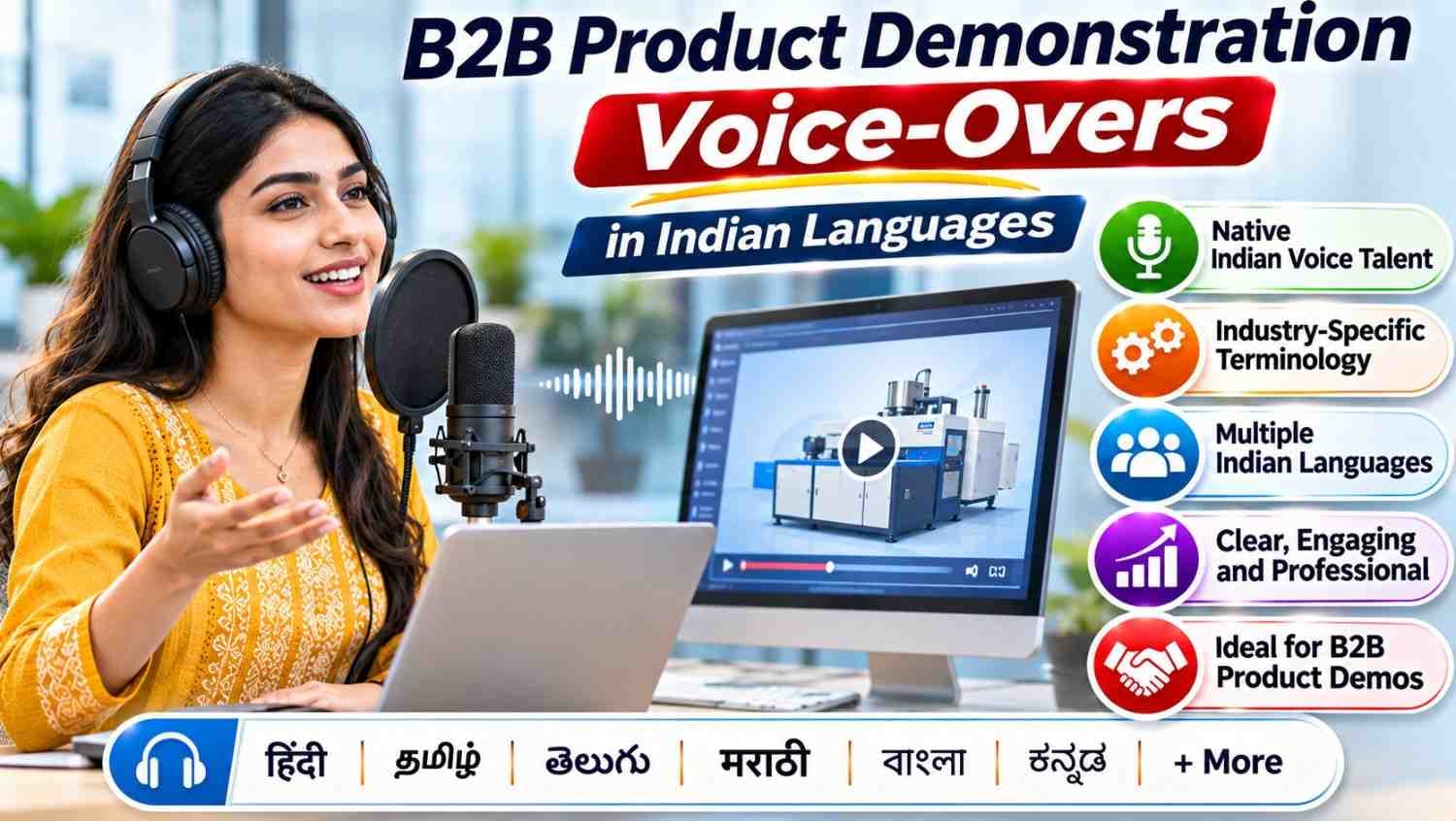
Why B2B Product Demonstrations Need Precise Narration?
Business buyers usually evaluate products against defined operational requirements. Procurement managers may concentrate on specifications and supply arrangements, while engineers examine functions, compatibility, and procedures. Narration should serve those distinct questions without turning the demonstration into an advertisement.
Explain Functions Alongside Visible Evidence
A useful voice-over identifies what the viewer sees, explains an operating sequence, and clarifies why a feature matters in its intended application. For example, a materials-handling video might show a control panel while narration explains the operator's next action. However, the voice should not repeat every label already visible on screen. Pauses let viewers examine movements and diagrams.
Some demonstrations work better with captions, diagrams, or on-screen instructions alone, especially when surrounding sound carries important information. Choose narration when spoken explanation adds context that visuals cannot supply efficiently. Technical claims should match approved product records, not marketing assumptions.
Choosing Indian Languages Around Actual B2B Audiences
Regional language production should follow the people who use, purchase, and distribute the product. A manufacturer's dealer network may require different language support from its engineering customers, even within the same state or industrial sector.
Prioritise Language Demand Rather Than Coverage Counts
Review enquiries, distributor feedback, training requests and the locations of decision-makers. Hindi, Tamil, Telugu, Marathi, Bengali, Kannada, Malayalam, Gujarati, Punjabi and Odia may all be relevant, but no fixed combination suits every business. Language preferences can vary within each region and professional group.
Technical buyers may prefer certain English terms within otherwise regional-language explanations. Therefore, consult sales engineers and representative listeners about natural vocabulary, pronunciation and mixed-language conventions before approving scripts. Start with languages supported by business needs, then expand as useful feedback develops.
Map each proposed recording to a communication need:
- Distributor presentations: Identify the language teams use during regular product briefings.
- Operator training: Confirm how technicians describe controls at work.
- Procurement reviews: Ask which language purchasers prefer for formal explanations.
- After-sales support: Check whether teams can answer follow-up questions in that language.
Separating Translation, Localisation and Audio Production
A translated script supplies words for another language; it does not deliver a finished product video. Teams must also decide how those words sound, where they appear within the demonstration and what technical references viewers need.
Select the Appropriate Voice and Text Format
Voice-over recording adds spoken narration to the video, often replacing the original explanatory track. Audio localisation includes script adaptation, pronunciation decisions, recording and final mixing. Dubbing commonly replaces original speech; lip-synchronised dubbing additionally attempts to match visible mouth movements.
Subtitle localisation supplies text for viewers who need another language or prefer reading. Captions can also convey meaningful non-speech audio for accessibility. These options serve different needs, and businesses may combine them instead of assuming one format replaces the others.
For instance, a technical presentation with no visible speaker rarely needs lip matching. Instead, a voice track can follow footage while localised captions support viewers who mute sound. A person speaking directly to camera may create different expectations about synchronisation.
Building Scripts That Preserve Technical Meaning
Recording should begin only after product owners approve the source script. Poorly organised sentences become harder to translate, and errors in the original specifications can spread across every language version.
Verify Claims, Measurements and Operating Steps
For each scene, state the product function, intended audience and exact visual action. Check model names, component labels, measurements, units, approved capabilities and safety statements against current documentation. An industrial demonstration needs particular care when narration tells operators to touch controls or follow a sequence.
Keep sentences sufficiently short for clear speech without removing necessary qualifications. Avoid promises about performance that the manufacturer cannot substantiate. Additionally, flag numbers and decimal values for separate review because a misread quantity may change the instruction substantially.
Establish a Shared Terminology and Pronunciation Record
Not every English technical expression needs translation. Some software controls, engineering abbreviations or component names remain recognisable in English; others need a regional equivalent or brief explanation. Let the audience and subject determine the choice.
Maintain one glossary across scripts, narration, subtitles and sales documents. Include the approved spelling, meaning and spoken form of unfamiliar model numbers. Where a term creates doubt, ask a product specialist before recording rather than improvising a plausible translation.
Casting Voices and Recording Clear Technical Audio
B2B narration calls for intelligibility, appropriate authority and a pace that lets listeners follow the product. The most suitable voice reflects the intended task, not assumptions about gender, accent or a universally persuasive style.
Assess Vocal Delivery and Pronunciation
Use short auditions containing actual technical sentences, numbers and difficult product names. Evaluate fluency, regional pronunciation, articulation, consistency and the artist's ability to take direction. A lively retail advertisement voice may distract from a measured equipment demonstration.
Provide a pronunciation sheet and sample readings before full recording. Engineers should confirm disputed abbreviations, units and model identifiers. Consequently, later language versions can follow the same technical conventions without sounding unnatural.
Control Recording Conditions and File Quality
A controlled acoustic space reduces echoes and intrusive background sounds. Good microphone technique, suitable recording levels and careful monitoring help prevent distortion and clipping. Editors can remove distracting mouth noises and balance levels, but excessive noise processing may damage speech clarity.
Agree on file formats, track separation and delivery specifications with the video editor before recording. Requirements depend on the publishing platform and production workflow, so no single audio format suits every commission.
Synchronising Narration With Product Demonstrations
Timing determines whether the spoken explanation supports the visual evidence. A technically correct recording can still confuse viewers when narration describes a machine movement or software command after it appears on screen.
Adapt Duration Without Rushing the Speaker
Regional translations may contain more or fewer spoken syllables than the source script. Editors should align each statement with a close-up, animation, interface action or assembly step. Where a sentence overruns its scene, simplify wording without losing meaning, extend an appropriate shot or revise pauses.
Do not automatically increase narration speed. Viewers need time to recognise controls, read values and connect an instruction to the visible action. Test the finished language version with the actual video, not audio alone.
During final playback, check transitions in both directions: narration should neither anticipate a button before it appears nor continue after the camera leaves a component. If the video carries warning tones or operational sounds, preserve their audibility and avoid masking them with speech.
Different Narration Needs for Machinery and Software
Industrial equipment and enterprise software may share commercial audiences, but they present different kinds of evidence. Machinery videos often show physical processes; software demonstrations depend on precise interface labels and changing digital workflows.
Industrial Equipment and Automation
Narration may identify controls, operating stages, component relationships and relevant specifications. For material-handling or electrical equipment, review any safety-related wording against approved technical instructions. A voice artist should not infer capacities or operating permissions from footage.
Enterprise Software and SaaS Walkthroughs
Software narration should follow visible menus, permissions, dashboards, reports and configuration steps. Some interface labels may remain in English even in a regional-language voice-over; the wording must match what users can actually select. When a software update moves a control or changes a feature, revisit the related audio and captions before reusing the video.
In both categories, define the viewing situation. A salesperson presenting on a large screen can pause to answer questions, while someone viewing alone on a phone may need more explicit orientation. This difference can affect pacing and the amount of detail spoken.
Supporting Distributors, Sales Teams and Product Training
Dealers may use the same demonstration for a first sales conversation and later technical onboarding. Those purposes demand different levels of detail: buyers need a clear explanation of applicability, while service personnel may require precise steps and limitations.
Provide approved regional-language versions so distributors do not create inconsistent informal narration. However, voice-over alone cannot establish suitability for a buyer's operation or guarantee orders. Pair recordings with current specifications and access to technical support for unanswered questions.
Sales teams should also know which portions of a recording explain standard features and which describe optional configurations. When a regional-language video omits conditions that the written brochure includes, distributors may unintentionally overstate the product's capabilities. Consistent source information helps prevent that mismatch.
Human Narrators, Synthetic Voices and Usage Permissions
Human artists can interpret context, take performance direction, and resolve unusual pronunciations during recording. Synthetic narration may help with repeatable scripts or frequent updates, depending on language quality and available controls. Neither approach eliminates the need for technical and linguistic review.
Before using a synthetic replica of an identifiable person's voice, obtain appropriate consent and clarify permitted uses. For any narration, confirm commercial rights, territories, duration, distribution channels and permissions for future edits in the relevant agreement. Avoid assuming that payment for recording automatically covers every reuse.
Production Workflow, Review and Long-Term Maintenance
A coordinated process prevents late corrections from multiplying across languages. Product owners, translators, voice artists, engineers and editors should work from the same approved information and identify who signs off each stage.
- Define the brief: Confirm products, audiences, language versions, channels and delivery requirements.
- Approve source material: Check technical claims, demonstration order and safety wording.
- Localise scripts: Translate, adapt terminology and validate pronunciation with specialists.
- Record and edit: Direct the artist, monitor audio, and prepare clean language tracks.
- Synchronise: Match narration, interface actions, captions and visual transitions.
- Review and release: Check technical accuracy, linguistic quality, sound, and file completeness.
Professional multilingual voice-over services in India may coordinate these disciplines, but businesses still need to provide verified product information and nominate responsible approvers. Compare quotations by language count, script length, voice selection, studio work, synchronisation, revisions and usage rights instead of recording price alone.
After release, store editable scripts and approved audio by product model, language and version. A specification correction may require only a short re-recording and revised scene, while a redesigned demonstration might need broader production. Keep caption files aligned with changes, and archive obsolete tracks to prevent accidental distribution.
For final approval, assign separate sign-offs for spoken language, product facts, and audio engineering. Test the exported video through the intended playback channel, including smaller screens or shared meeting-room systems where relevant. A correct studio file can still produce poor listening conditions after distribution.
Conclusion
Effective multilingual narration begins with a sound technical script and a clear picture of who will watch the demonstration. Appropriate language choices, pronunciation control, suitable vocal delivery and careful synchronisation keep the explanation connected to the product. Quality checks should involve both language reviewers and people responsible for technical accuracy. Before commissioning recording, businesses should also settle distribution rights, revision responsibilities and delivery formats. Those decisions make subsequent product updates easier to manage across Indian language versions.
FAQs
Why use a professional voice-over for B2B product videos?
Professional narration can explain product functions, operating sequences, and technical specifications while viewers watch the relevant actions. It also provides consistent wording across approved presentations. However, narration is useful only when it adds information beyond captions or visuals, and technical reviewers must confirm that every claim matches the product.
Which Indian languages should manufacturers record first?
Prioritise languages that match actual distributor networks, customer enquiries and product training requirements. Hindi, Tamil, Telugu, Marathi and other regional languages may be relevant, depending on the audience. Ask representative listeners about preferred technical expressions rather than selecting versions solely from state boundaries or general population assumptions.
How does technical narration differ from promotional voice work?
Technical narration focuses on accurate terminology, measured delivery, operating instructions, and alignment with demonstrated functions. Promotional work may place greater emphasis on emotional appeal or brand tone. B2B videos can contain both elements, but instructions, model identifiers, and specifications require particularly careful pronunciation and subject review.
Should companies translate the script before recording?
Yes, when they need a different spoken language. First, verify the source script's technical facts and intended visual sequence. Then adapt the translated version for natural speech and available screen time. Approve terminology and difficult pronunciations before the voice artist begins the final session to avoid unnecessary corrections.
How do voice artists handle model names and abbreviations?
Provide a pronunciation glossary, reference recordings, and clear directions about which terms remain in English. Technical reviewers should check model identifiers, abbreviations and units, especially where different spoken forms could confuse viewers. Short sample recordings help identify uncertainties before a complete narration session starts, reducing preventable re-recordings.
How are multilingual narrations synchronised with video?
Editors align spoken statements with relevant equipment movements, close-ups, interface actions and transitions. As translated scripts differ in length, they may adjust phrasing, shot durations, or pauses. The final video needs a language-specific review because a clean standalone audio track can still describe actions at the wrong moment.
Can synthetic voices replace human narrators?
Synthetic narration may suit some consistent, frequently revised material when pronunciation and delivery meet project requirements. Human artists may offer more flexible direction for difficult terminology or nuanced explanations. Both approaches need language and technical review. Any use of an identifiable person's replicated voice also requires appropriate permission.
What affects multilingual voice-over recording costs?
The scope depends on languages, script length, voice talent, technical review, studio requirements, audio editing, and video synchronisation. Delivery formats, revisions, usage territory and licensing terms may also affect quotations. Compare proposals that specify what they include, since a recording-only price does not necessarily cover translated scripts or finished video files.
What should businesses check before approving final recordings?
Review terminology, numbers, model names, voice consistency, audio clarity, and timing against the video. Confirm that each language file matches the correct product version and contains every required scene. Technical owners should approve specifications; linguistic reviewers should check natural speech; editors should verify synchronisation and delivery completeness.
Can manufacturers update voice-overs after product changes?
Yes. Teams can revise individual script segments, re-record affected lines, and update the matching footage or captions. The extent of work depends on whether the change affects wording, screen timing, or the entire demonstration. Version-controlled scripts and archived language tracks help prevent outdated specifications from returning to circulation.


 0.00 SRY