

Opening: Breaking the Speed Limit of Human Inquiry
For ages, the engine of scientific progress has been fueled by the human intellect, operating at a deliberate, biological pace. The classic cycle—observe, formulate a hypothesis, test through experiment, analyze results—has been the bedrock of knowledge. Yet, this process is intrinsically limited by our own physiology: the speed of synaptic firings, the endurance of our focus, and the finite capacity of our memory. Consider the monumental effort once required to map the three-dimensional shape of a single protein, a feat that could define an entire career and earn the highest scientific honors. Developing a new pharmaceutical could consume a decade and resources in the billions. While effective, the velocity of discovery was shackled to the human condition.
Today, we are crossing a threshold into a new era, often termed the "Age of Acceleration." The primary agent of this shift is not a replacement for the human scientist, but a powerful partner: artificial intelligence, particularly through machine learning. This partnership moves beyond simple automation; it is a cognitive augmentation. We are now collaborating with systems capable of discerning subtle patterns within oceans of data that would overwhelm any human team, generating tens of thousands of credible research leads in a single night, and running intricate simulated experiments by the millions in the time it takes to calibrate a single piece of lab equipment. This represents the most significant transformation in our methodology for probing reality since the scientific revolution itself.
The paradigm is shifting from slow, human-led experimentation to rapid, AI-powered generation and prediction. This "AI Researcher" operates without fatigue, is free from unconscious bias, and can internalize the sum total of published scientific literature to inform its every action. It is acting as a catalyst for breakthroughs across every discipline, from the molecular to the cosmic, accelerating progress at a rate that is rapidly outpacing traditional research models and heralding a potential golden age of invention and understanding.
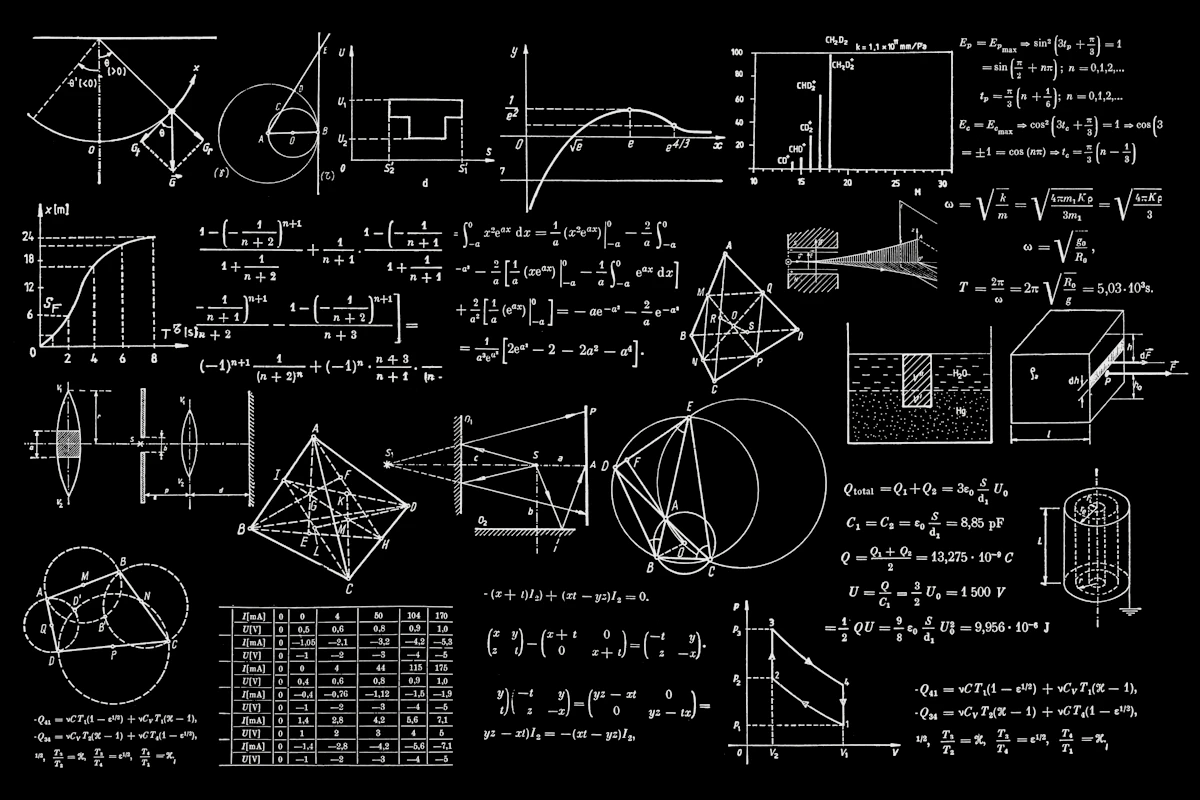
source The evolution from individual, manual investigation to scalable, AI-driven exploration.
Section 1: The Engine Room – The Core AI Technologies Powering Modern Science
To grasp the capabilities of the AI-augmented researcher, we must look under the hood at the specific types of machine learning architectures engineered to grapple with the complexities of the natural world. These are not mere number-crunchers but sophisticated tools for modeling reality.
The Foundational Toolkit
1. Deep Neural Networks (DNNs): The Universal Pattern Learners Inspired loosely by biological brains, DNNs are layered mathematical models whose great strength is their ability to approximate almost any complex relationship if given sufficient data. In a research context, they learn the hidden rules that connect cause and effect. For instance, they can learn the function that links:
- The specific arrangement of atoms to a material's property, like hardness or conductivity.
- Genetic markers to the likelihood of a disease.
- Raw signals from a telescope to the classification of a distant object. Unlike traditional statistical models that require scientists to guess the relationship (e.g., is it linear or exponential?), DNNs extract the relationship directly from the dataset itself.
2. Generative AI: The Imagination of the Machine If standard AI models are for identification ("this is a cat"), generative models are for creation ("design a new molecule"). They are the hypothesis engines of modern science.
- Generative Adversarial Networks (GANs): This framework uses two dueling neural networks. One (the Generator) invents new data samples, like a novel chemical compound. The other (the Discriminator) tries to catch fakes by comparing them to real data. Through this contest, the Generator learns to create highly convincing and novel scientific constructs.
- Variational Autoencoders (VAEs) and Diffusion Models: These systems learn a compressed, simplified representation (a "latent space") of a vast dataset, such as all known organic compounds. Researchers can then explore this space, mixing and matching features to generate new, plausible candidates that possess desired characteristics, venturing into uncharted territories of chemical or material design.
3. Reinforcement Learning (RL): The Autonomous Experimenter RL algorithms learn by taking actions and receiving feedback, much like training a pet with rewards. In a laboratory setting, an RL agent can be tasked with:
- Operating robotic systems to find the optimal protocol for synthesizing a target material, with success as its reward.
- Tweaking thousands of parameters in a complex climate simulation to best match historical records.
- Navigating the sequence of steps in a drug discovery pipeline to maximize efficiency. Through countless digital trials, the AI teaches itself the scientific method, optimizing the path to discovery.
4. Blending AI with Physical Law A significant critique of pure neural networks is their "black box" nature—they find correlations without explaining why. New hybrid models integrate fundamental physics to ensure credible science.
- Symbolic Regression: This technique searches through countless potential mathematical formulas to find a simple, human-readable equation that accurately describes the observed data, effectively allowing AI to rediscover fundamental laws from scratch.
- Physics-Informed Neural Networks (PINNs): These networks are trained not only on data but are also constrained by known physical principles (like conservation of energy). This hardwires real-world plausibility into their predictions, combining the flexibility of AI with the unwavering rules of nature.
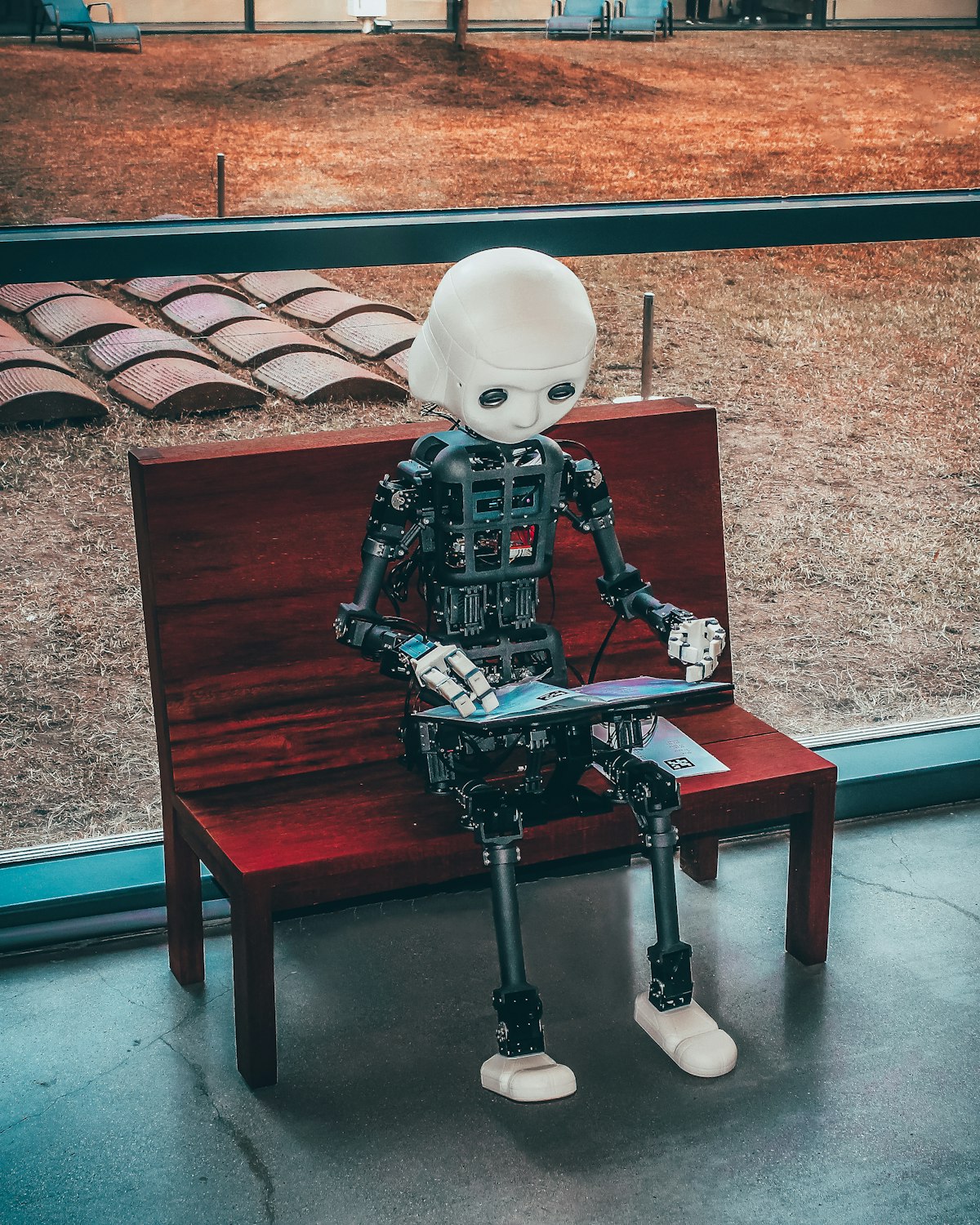
source The specialized AI frameworks that enable machines to model, create, and experimentally explore.
Section 2: A Biological Breakthrough – The AI That Solved Protein Folding
The story of protein folding stands as the definitive case study of AI's disruptive power in science. This grand challenge—predicting the intricate, functional 3D shape of a protein from its linear chain of amino acids—is vital for understanding life and disease. For over half a century, progress was slow, relying on immensely expensive and time-consuming laboratory techniques.
The Scale of the Challenge
The complexity is almost unimaginable. A single protein could theoretically fold into more possible configurations than there are atoms in the known universe. Previous computational approaches, which tried to simulate the physical folding process, demanded immense supercomputing power to model just a few microseconds of activity, while actual folding occurs in thousandths of a second.
The AlphaFold Transformation
The landscape changed overnight in 2020 with DeepMind's AlphaFold2. At the Critical Assessment of protein Structure Prediction (CASP), it achieved accuracy rivaling that of precise lab experiments.
AlphaFold's Approach: It did not simulate physics. Instead, it used a deep learning network trained on a vast database of known protein structures. A key innovation was its use of an "attention mechanism," which allowed it to identify which parts of the amino acid sequence were most influential on the final shape, even if they were far apart in the chain. Crucially, it also provided a confidence score for every part of its prediction, guiding biologists on where to trust the AI's model.
The New World of Structural Biology
The public release of predicted structures for nearly all cataloged proteins created a universal resource—a "Google Maps for biology."
- Democratized Access: Any researcher, anywhere, can now obtain a high-quality structural model for their protein of study in moments, at no cost.
- Revolutionized Drug Hunt: Drug designers can now start projects by computationally testing how potential drug molecules fit into the AI-predicted structures of disease-related proteins, bypassing years of initial lab work. This has already accelerated early-stage research for conditions like cancer.
- Exploring the Unknown: Scientists are now mining the predicted structures of proteins from extreme and obscure life forms—the "dark proteome"—searching for new biological tools and drug candidates that were previously invisible.
AlphaFold did more than solve a puzzle; it redefined the field's focus from determining structure to understanding function and application.

source The transformation from a one-dimensional genetic code to a three-dimensional functional prediction, powered by AI.
Section 3: The Automated Inventor – AI in Material and Chemical Discovery
While biology benefits from AI's predictive power, chemistry and material science are being reshaped by its generative and automated capabilities. The goal is to escape the traditional, slow cycle of trial, error, and serendipity.
The Vastness of Possibility
The universe of potential new materials is practically infinite. Simply mixing a handful of chemical elements in different proportions can yield billions of unique crystalline candidates. Historically, finding a material with a specific trait—like perfect efficiency for a solar cell or a safer, higher-capacity battery electrolyte—was a marathon of educated guesses and laborious testing.
AI as the Proactive Designer
Modern AI inverts the old process. It doesn't just test possibilities; it generates the most promising ones from scratch.
- Generative Design at Scale: Projects like the Materials Project use AI to computationally screen millions of hypothetical compounds. Advanced systems like Google's GNoME can generate billions of novel crystal structures, predict which are stable, and forecast their properties—all before a single real-world experiment. A 2023 breakthrough demonstrated this by predicting 2.2 million new stable crystals, vastly expanding the library of known materials.
- Closing the Loop with Robotics: The digital design is just the beginning. Pioneering companies now connect generative AI directly to fully automated robotic laboratories. The AI proposes a promising molecule; a cloud-based robotic lab synthesizes and tests it; the results are fed back to the AI to refine its next idea. This creates a perpetual, self-improving discovery engine.
Powering the Future: The Search for Better Batteries
The limitations of current lithium-ion batteries are a major hurdle for clean energy and transportation. AI is at the forefront of the search for successors.
- Screening Novel Electrolytes: AI models are rapidly evaluating hundreds of thousands of compounds to identify solid-state electrolytes that are stable, safe, and highly conductive.
- Engineering Advanced Electrodes: Generative models are proposing new nano-architectures for battery electrodes that can store more energy and endure more charging cycles.
- Predicting Battery Lifespan: Machine learning analyzes operational data from batteries to forecast failures like dendrite growth long before they happen, informing the design of more durable systems.
This acceleration enables exploration of chemical realms human intuition would never venture into, leading to foundational new classes of materials.

source The physical AI discovery engine: robotic laboratories that tirelessly test machine-generated hypotheses.
Section 4: The AI Astronomer – Mapping the Cosmos in the Data Deluge
Astronomy has entered the era of "big data." New observatories, like the Vera C. Rubin Observatory, will generate tens of terabytes of image data every single night for a decade. This volume is impossible for human teams to analyze comprehensively. The AI cosmologist has become not just helpful but essential.
From Sorting to Discovering
Initially, machine learning helped with basic cataloging: classifying objects as stars or galaxies. Now, it is a primary tool for genuine discovery.
- Anomaly Detection: Unsupervised learning algorithms are unleashed on massive datasets to find objects that don't match any known category—the cosmic "oddballs." This has led to the identification of new types of stars and unexplained celestial phenomena.
- Hunting Ripples in Spacetime: Projects like LIGO use convolutional neural networks to find the faint signature of gravitational waves from colliding black holes within incredibly noisy data, doing so faster and more reliably than previous methods.
AI as Cosmic Simulator and Interpreter
Some of the most profound uses of AI involve connecting the dots between theory and the night sky.
- Ultra-Fast Universe Simulation: Running a single, detailed simulation of cosmic evolution can take months on a supercomputer. Scientists now train AI to act as an instant "emulator." After learning from a set of full simulations, the AI can predict the results of new cosmological models in seconds, allowing thousands of theories to be tested against real data.
- Cleaning and Clarifying the Cosmos: AI algorithms sharpen images from telescopes like the JWST, disentangling the light from overlapping galaxies and removing noise. This allows us to peer further back in time and space than ever before.
The Search for Other Minds
Even the Search for Extraterrestrial Intelligence (SETI) has embraced AI. New algorithms analyze radio telescope data with superior sensitivity, searching for the subtle, technological signatures of alien civilizations while filtering out natural and human-made interference.

source AI as the indispensable navigator for the new astronomy, finding rare signals in an ocean of cosmic data.
Section 5: The Planetary Engineer – AI's Role in Climate Science and Sustainability
The climate crisis is a problem of staggering complexity, involving the chaotic interplay of Earth's atmosphere, oceans, land, and ice. While traditional climate models are powerful, they are too computationally heavy to provide high-resolution, local forecasts. AI is becoming a key tool for both understanding and addressing planetary-scale challenges.
High-Definition Climate Forecasting
A technique called "downscaling" employs AI to add fine-grained detail to broad climate model projections. A generative model learns the historical relationship between large-scale weather patterns and local conditions. It can then apply this learned relationship to future global projections, generating detailed, city-specific forecasts for extreme heat, rainfall, or storm surges decades in advance, which is crucial for planning resilient infrastructure.
Designing Solutions for a Warming Planet
AI is actively involved in inventing and evaluating climate intervention strategies.
- Next-Generation Carbon Capture: Generative models are designing novel porous materials, called metal-organic frameworks (MOFs), engineered to capture CO2 from the air more efficiently and with less energy than current options.
- Modeling Ocean-Based Solutions: AI is used to simulate the complex effects of proposed methods to enhance the ocean's CO2 absorption, helping to identify safe approaches and avoid damaging marine ecosystems.
Managing the Clean Energy Transition
The shift to renewable power sources like wind and solar, which are variable by nature, requires intelligent management that AI provides.
- Forecasting Renewable Output: AI uses satellite and weather data to predict energy generation from solar panels and wind farms from minutes to days ahead.
- Balancing the Smart Grid: Reinforcement learning algorithms dynamically manage energy flow, storage, and demand across the grid in real-time to prevent blackouts and maximize efficiency.
- The Fusion Frontier: In the quest for fusion energy, deep learning models are crucial for predicting and controlling the super-hot, unstable plasma inside experimental reactors like ITER.

source AI's dual application: modeling Earth's macro-scale climate systems and designing micro-scale materials for solutions.
Section 6: The Digital Humanist – AI in the Study of Society and History
The reach of the AI researcher extends into the humanities and social sciences, where it acts as a collaborator capable of analyzing cultural and historical patterns across immense scales of time and data.
Revealing the Ancient World
- Deciphering Historical Texts: Natural Language Processing (NLP) models are applied to ancient documents to suggest authorship for anonymous works, trace the evolution of languages, and even propose the most likely words to fill in gaps in damaged inscriptions.
- Discovering Lost Landscapes: Computer vision algorithms scan LiDAR and satellite imagery to detect the faint footprints of ancient settlements, roadways, and agricultural systems hidden beneath forests or fields, rewriting our understanding of past civilizations.
Modeling Modern Societies
- Simulating Social Dynamics: Agent-based models, enhanced by machine learning, create virtual societies to test how ideas, behaviors, and social divisions spread. These "digital sandboxes" allow researchers to explore the potential outcomes of policies or information campaigns before they are implemented in the real world.
- Analyzing Cultural Trends: By processing millions of books, newspapers, and legal documents, AI can trace the rise and fall of ideologies, economic trends, and political rhetoric over centuries, providing a data-driven backbone to historical analysis.
In these fields, the AI does not give final answers but reveals connections, trends, and questions for human experts to interpret with their deep contextual knowledge, creating a powerful, synergistic form of scholarship.
Conclusion: Navigating the New Frontier – Promise and Peril
The ascent of the AI-augmented scientist is a monumental shift, but it is not without significant challenges and risks that must be thoughtfully managed.
The Inherent Challenges
- The Interpretability Dilemma: When an AI system proposes a new drug or material, its reasoning is often opaque—a "black box." If we cannot understand why it made a suggestion, can we fully trust it? The pursuit of Explainable AI (XAI) is therefore paramount.
- Amplifying Past Biases: AI models learn from existing scientific data, which contains the historical biases, gaps, and errors of human research. An unchecked AI can perpetuate and even amplify these flaws, leading science in unproductive or unethical directions.
- The Homogenization Hazard: As powerful foundational models (like AlphaFold or large language models) become standard tools, there is a risk that global research could converge on similar ideas and methods, potentially stifling the creative, unconventional thinking that drives major breakthroughs.
- A Crisis of Evidence: When discoveries originate from inscrutable algorithms, the scientific community must establish new standards for what constitutes valid evidence and how to rigorously validate AI-generated findings.
The Path Forward: The Hybrid Researcher
The most fruitful future lies not in choosing between human and machine, but in forging a unified Hybrid Researcher. This integrated model leverages the unique strengths of each:
- The Human Role: To provide curiosity, ethical guidance, and the creative spark that frames profound questions. To interpret AI findings within the broader tapestry of theory, culture, and society. To design the crucial real-world experiments that ground digital discoveries in physical reality.
- The AI Role: To process datasets of unimaginable scale, generate novel hypotheses at an unprecedented rate, run limitless digital simulations, and detect subtle, cross-disciplinary patterns invisible to the human eye. To serve as an indefatigable, omnivorously read research partner.
The laboratory of tomorrow will be this hybrid space. It will contain robotic automation alongside immersive virtual reality suites where researchers converse with their AI counterparts, exploring high-dimensional data as navigable landscapes. The AI will suggest; the human will select and contextualize. The machine will handle computation at scale; the human will provide wisdom and wonder.
We are at the genesis of this accelerated epoch. The AI researcher is our most potent instrument yet for unraveling the universe's mysteries and confronting its greatest challenges. Its true legacy will be measured not merely in patents or papers, but in how magnificently it amplifies humanity's most defining trait: our relentless pursuit of understanding.

source The future of research: the Hybrid Scientist, a synergistic fusion of human creativity and machine intelligence.

 2.760 SRY