
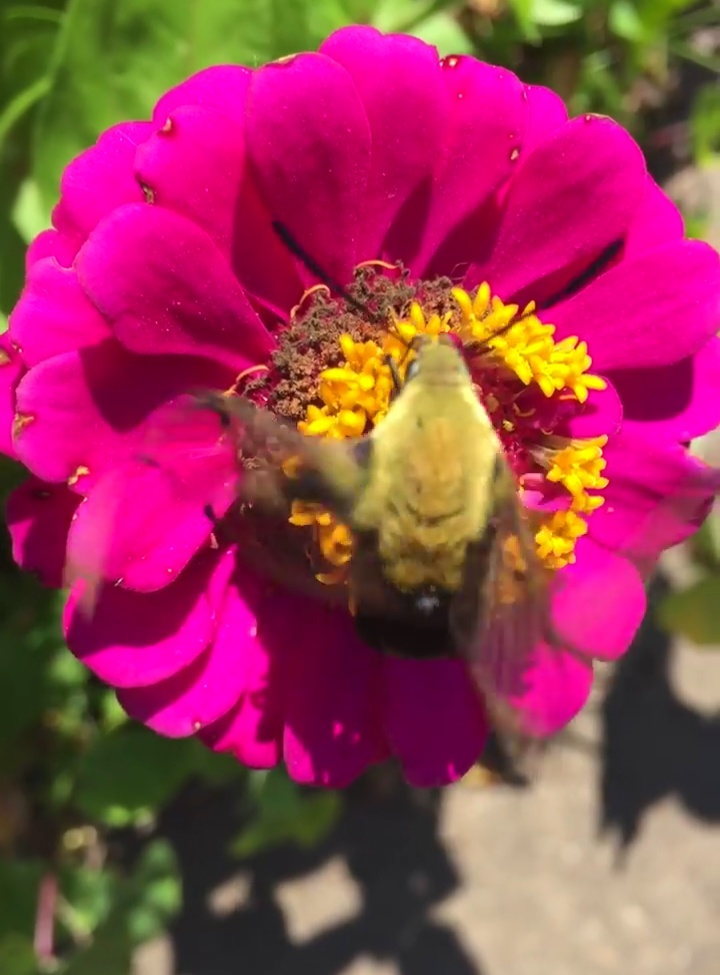
We often see that bees and flowers are interconnected in their lives. Their relationship certainly has benefits between the two, each of which has advantages. So in this case it is symbiosis of methodism.
While methodism itself is symbiosis derived from Greek συμβίωσις which means living together, comes from the words σύν "bersama" and βίωσις "life", which are all kinds of long-term and close biological interactions between two different biological organisms, whether mutualism, commensalism, or parasitism. (dictionary)
Then experts say that the organisms involved, each called a symbiont, can be of the same or different species. In 1879, Heinrich Anton de Bary defined "different organisms living together". (Book of insect collection: 2000)


Basically each type of animal has its own relationship or as mentioned above, then experts share the various forms of symbiosis. In this case it is necessary to know that there are symbiotic forms, here are the types:

But in this post all symbiotic divisions are not explained but what will be explained is the symbiosis between bees / beetles and flowers. Like mutualism symbiosis in the form of pollination of the following flowers, namely the interaction of flowers and beetles. This example is the same process with the relationship of flowers and bees as well as flowers and butterflies. The beetle gets nectar and helps the pollination process from the flower itself, as does the activity of bees and flowers in this post.

So from the results of the symbiosis of the metualisme mentioned above, between bees or beetles with flowers both benefit. The benefits obtained by beetles that get food are in the form of honey and nectar. and flowers benefit because the pollination process is assisted by the beetle itself so that the flowers will gradually bloom on their own.
Actually symbiosis of metualisme not only occurs in beetles and flowers or bees and flowers, but it can occur in other animals. Symbiosis of mutualism also occurs in the interaction of crocodiles and plover birds. Plover birds have a habit of eating dirt as well as food remnants in the mouth and teeth of crocodiles. Buaya certainly also gets the benefits of the habit. Then the benefits are obtained by plover birds who get food for free. While crocodiles benefit because they become free from mouth disease because the feces are cleaned by birds that perch on the crocodile's own body. Thus the discussion about symbiosis of mutualism, Hopefully it will benefit you all and thank you very much.
**Tag**|**serey-quality**
------------ | -------------
**Camera**|**Canon EF 14mm f/2.8 L II USM**
**Taken By**|**@ira**
**Location**|**Kebun Bunga Bekasi**
**Themes**|**Simbiosis metualisme**
Symbiosis is capable of being something obligate, which means that one or both symbionts are completely dependent on each other for survival, or facultative when they generally can live independently.So thus based on the above understanding it can be concluded that: Symbiosis is all types of long-term and close biological interactions between two different biological organisms. Whereas Mutualism is an interaction between two living beings that are mutually beneficial to both parties themselves.
1. Symbiosis of Comensalism 2. Symbiosis Competition 3. Symbiosis of Mutualism 4. Symbiosis of Amensalism 5. Symbiosis of ParasitismThen the experts explained that symbiosis was classified based on physical attachment Symbiosis whose organism has a union of bodies is called conjunctive symbiosis, and the symbiosis in which they are not united is called disjunctive symbiosis When one organism lives in another organism such as mistletoe, it is called ectosymbiosis, when one partner lives in the tissues of other organisms, such as Symbiodinium in the coral, it is called endosymbiosis, maybe some of you already understand that understanding.

 0.000 SRY