
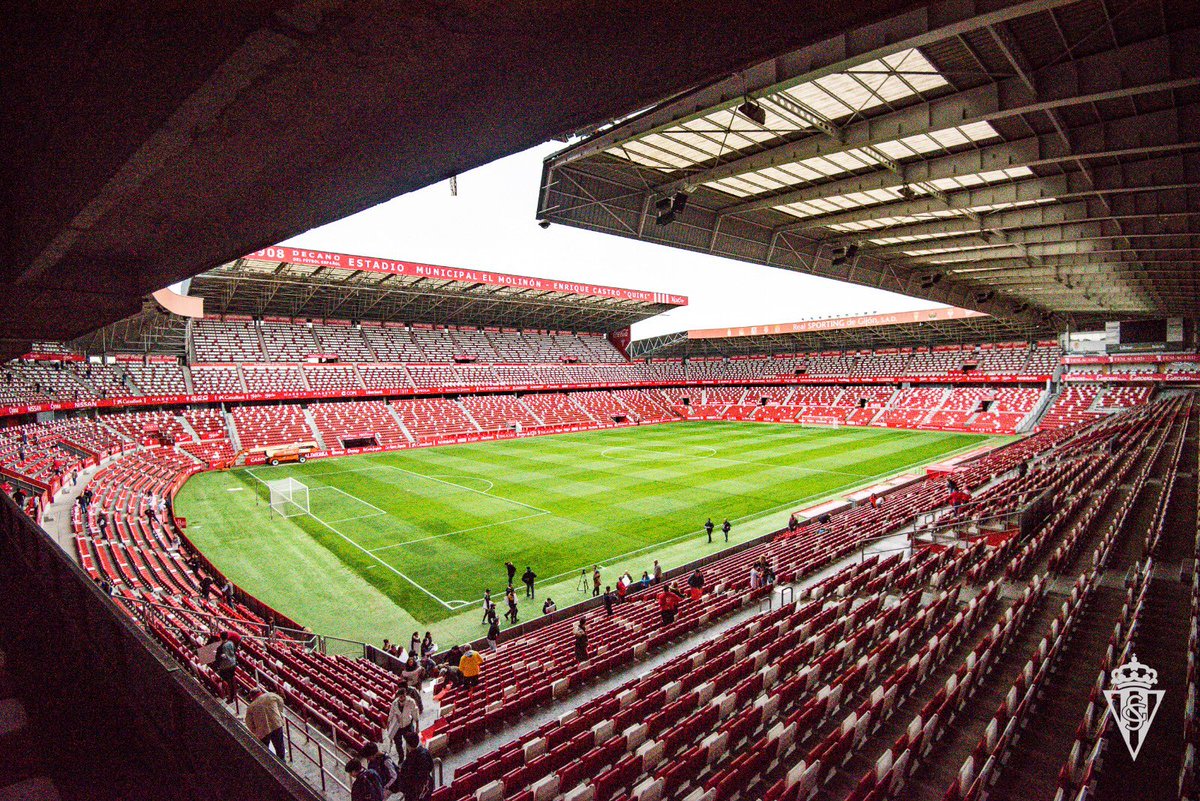
This is the oldest and most curious soccer stadium in Spain: 116 years old and immersed in a new reform.
El Molinón has become one of the most important fiefdoms of our country and aspires to be present at the next World Cup in 2030.
Soccer stadiums are one of the most important in the beautiful game. The fans celebrate, cry and enjoy in equal parts in them. Currently, many of them are undergoing changes to adapt to the new standards required by the different competitions.
Many clubs have changed stadiums to find new venues to accommodate the majority of their social mass, but there are still some that remain faithful over the years. One of them is Sporting de Gijón, which plays all its matches at the Estadio Municipal de El Molinón.
The home ground of the Asturian team is the oldest in Spain. Although the exact date of its construction is not known, the first references indicate that it was already operational in mid-1908. It would still take a few years to unite their paths, since it was not until 1915 when it became the official field of Sporting de Gijón.
Inaugurated in May 1908, 110 years ago, the Gijón stadium was baptized with its historic name because the esplanade where it was built used to be a huge water mill. The first chronicle of a match played in the stadium dates back to 1917, two years after Sporting began to use it as its official home ground.
The venue for matches in the 1982 World Cup, 9 Spanish National Team matches and remodeled in 2006, El Molinón hopes to soon return to LaLiga and once again become the oldest stadium in the top Spanish soccer competition.
Since a few months ago, and by popular proposal, the stadium's access gate number 1 bears the name of Jesús Castro, the historic goalkeeper of Sporting -brother of the legendary Quini-, who was remembered in this way on the 25th anniversary of his death after drowning while rescuing two children from the sea.

Estadios del mundo: El Molinón es el estadio de fútbol más antiguo y curioso de España.

Este es el estadio de fútbol más antiguo y curioso de España: 116 años e inmerso en una nueva reforma
El Molinón se ha convertido en uno de los feudos más importantes de nuestro país y aspira a estar presente en el próximo Mundial de 2030.
Los estadios de fútbol son uno de los más importantes del deporte rey. Las aficiones celebran, lloran y disfrutan a partes iguales en ellos. En la actualidad, muchos de ellos se encuentran sumidos en cambios para adaptarse a las nuevas y así cumplir con los estándares que piden en las diferentes competiciones.
Muchos clubes han cambiado de estadio para buscar nuevos recintos en los que acoger a la mayoría de su masa social, pero todavía hay algunos que siguen manteniendo fieles con el paso de los años. Uno de ellos es el Sporting de Gijón, que disputa todos sus partidos en el Estadio Municipal de El Molinón.
El feudo del conjunto asturiano es el más antiguo de España. Aunque no se conoce la fecha exacta de su construcción, las primeras referencias indican que a mediados de 1908 ya estaba operativo. Aún tardarían unos años en unir sus caminos, ya que no fue hasta 1915 cuando se convirtió en el campo oficial del Sporting de Gijón.
Inaugurado en mayo de 1908, hace ya 110 años, el estadio gijonés fue bautizado con su histórico nombre porque en la explanada en que fue levantado había hasta entonces un enorme molino hidráulico. La primera crónica de un partido jugado en la instalación data de 1917, dos años después de que el Sporting lo empezara a utilizar como su terreno de juego oficial.
Escenario de partidos del Mundial de 1982, de 9 partidos de la Selección Española y remodelado en 2006, El Molinón espera poder regresar pronto a LaLiga y volver a ejercer de estadio decano en la máxima competición del fútbol español.
Desde hace unos meses, y a propuesta popular, la puerta número 1 de acceso al estadio lleva el nombre de Jesús Castro, el histórico portero del Sporting –hermano del legendario Quini-, al que se recordó así en el 25 aniversario de su fallecimiento ahogado al rescatar a dos niños del mar.
Source images / Fuente imágenes: Wkipedia

Serey is a next-generation blockchain-based social networking platform with a cutting-edge Web 3.0 decentralized applications (dApps) ecosystem.
Participate by writing articles, commenting, voting and earn SRY tokens!
Serey es una plataforma de red social basada en blockchain de próxima generación con un ecosistema de aplicaciones descentralizadas (dApps) de vanguardia de la Web 3.0
Participa escribiendo artículos, comentando, votando y gana tokens SRY!



thank you for supporting my content.