

You assume that there is a direct correlation between currency value and economic strength. This is a misconception.
I will use some terms to clarify your idea, like, money movement, value, inflation etc.
Currency velocity is the average number of times a coin changes hands in a year. Its value tends to be higher in strong economies.
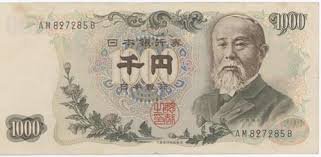
The size of a country's economy is the sum of all currencies of that country x the average velocity of that country's currency. Now, between the Bangladeshi Taka and the Japanese Yen, the value of one Bangladeshi Taka is higher. But the total value of Yen in Japan is much higher than the total value of Rupees in Bangladesh.
Now you will think 'then you have to print more money!' Not really. Because the amount of goods and services in Japan and its value is divided into Japanese yen. Similarly, the total value of goods and services in Bangladesh is divided into Bangladeshi taka. If Bangladesh has a amount of value and x amount of rupees, then the purchasing power of each rupee is (a/x). Now if the government prints y amount of extra money, but the value of the country does not increase, then the purchasing power of each money will become {a/(x+y)}, i.e. the purchasing power of money will decrease. This is called inflation.
The economic strength of Bangladesh and the strength of the economy of all countries depends on the value of goods and services of that country. As the production of a country increases, so does the power of its economy. If a country has a large amount of currency in circulation, the value of the currency or the exchange rate is low, but the country is by no means a weak economy or underdeveloped.

 1378.311 SRY