

Due to the lack of practical instruments in educational institutions, it often happens that whatever is being taught is never explained in terms of its practical application or its use in daily life, and thus that subject or that topic remains undiscovered, and then what is the benefit of studying algebra for us? Why are we studying trigonometry? Such questions are heard from the mouths of children. But in today's post, we are going to discover a website that has solved this problem very beautifully. Not only will you come to know the practical application of science knowledge, but you will also know how we use these things in our daily lives and how we can improve our work by using these things. So let's go to this website.

Screenshot taken from PhET Simulations and used for educational purposes only.
The name of the website is Physics Education Technology, the short form of which is PhET, and it is a non-profit organization of the University of Colorado. There is a website of simulations. Simulations mean such animations that we can run by ourselves. They are like games and are very fun. Here you can see more than 125 free science simulations that cover the topics of almost all physics, biology, and chemistry in high school. Now let's look at it with an example and see how we can get access to this website well.

Screenshot taken from PhET Simulations and used for educational purposes only.
When you search for PhET on Google, after clicking on the first website that comes up, some kind of desktop or web frontend will open in front of you. Now you can see some boxes in front of you in which Physics, Mathematics, Statics, Chemistry, Earth and Space, and Biology are written. These are actually landing pages, after clicking on which you are redirected to the simulations of the related subject. For example, here we have Physics. 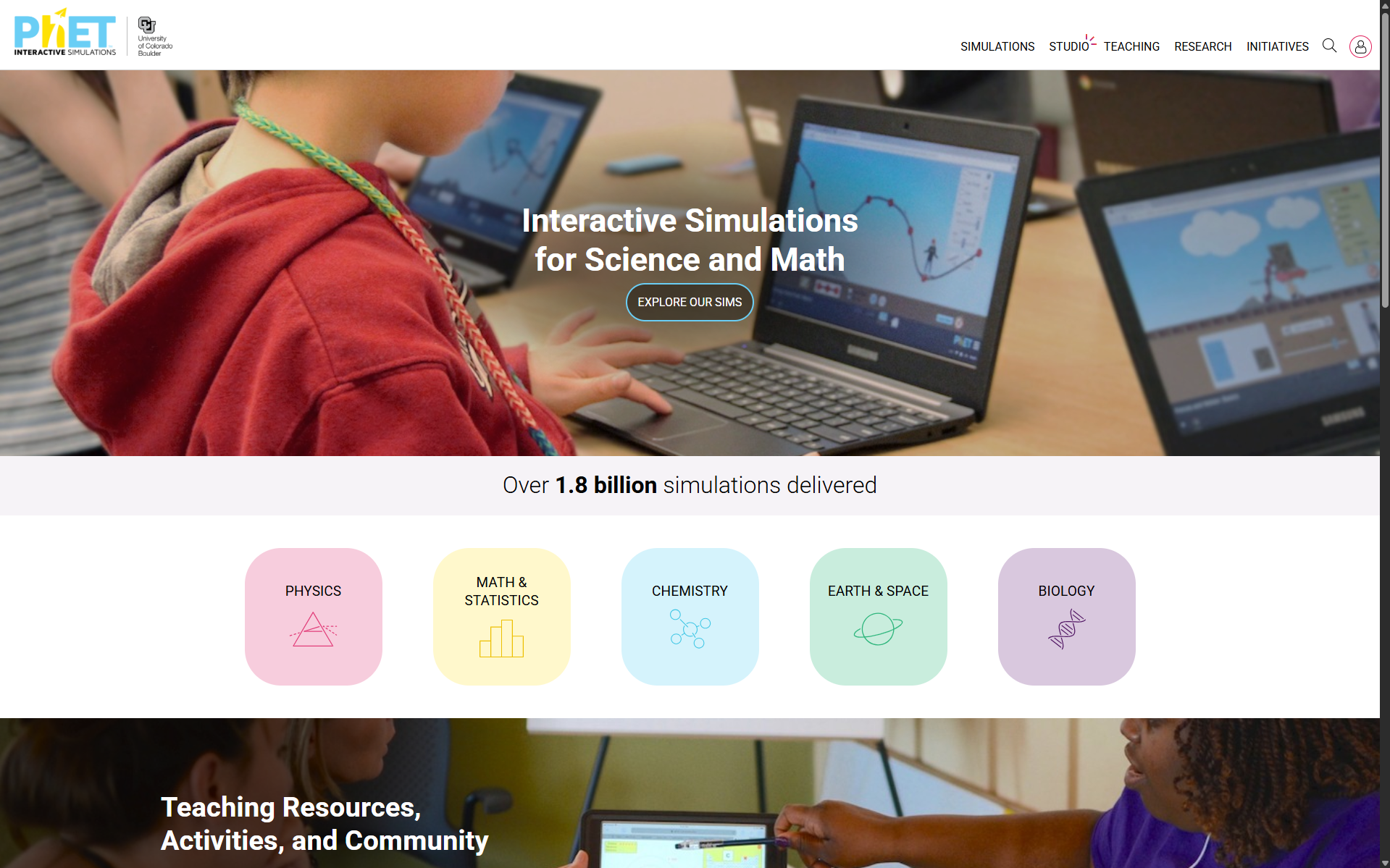
Screenshot taken from PhET Simulations and used for educational purposes only.
Now, as soon as we click on Physics, a new page opens in front of us where we can see many simulations of Physics. I think there are about a hundred or more than a hundred simulations, and as I said earlier, these cover the maximum physics topics of high school, so let's see how.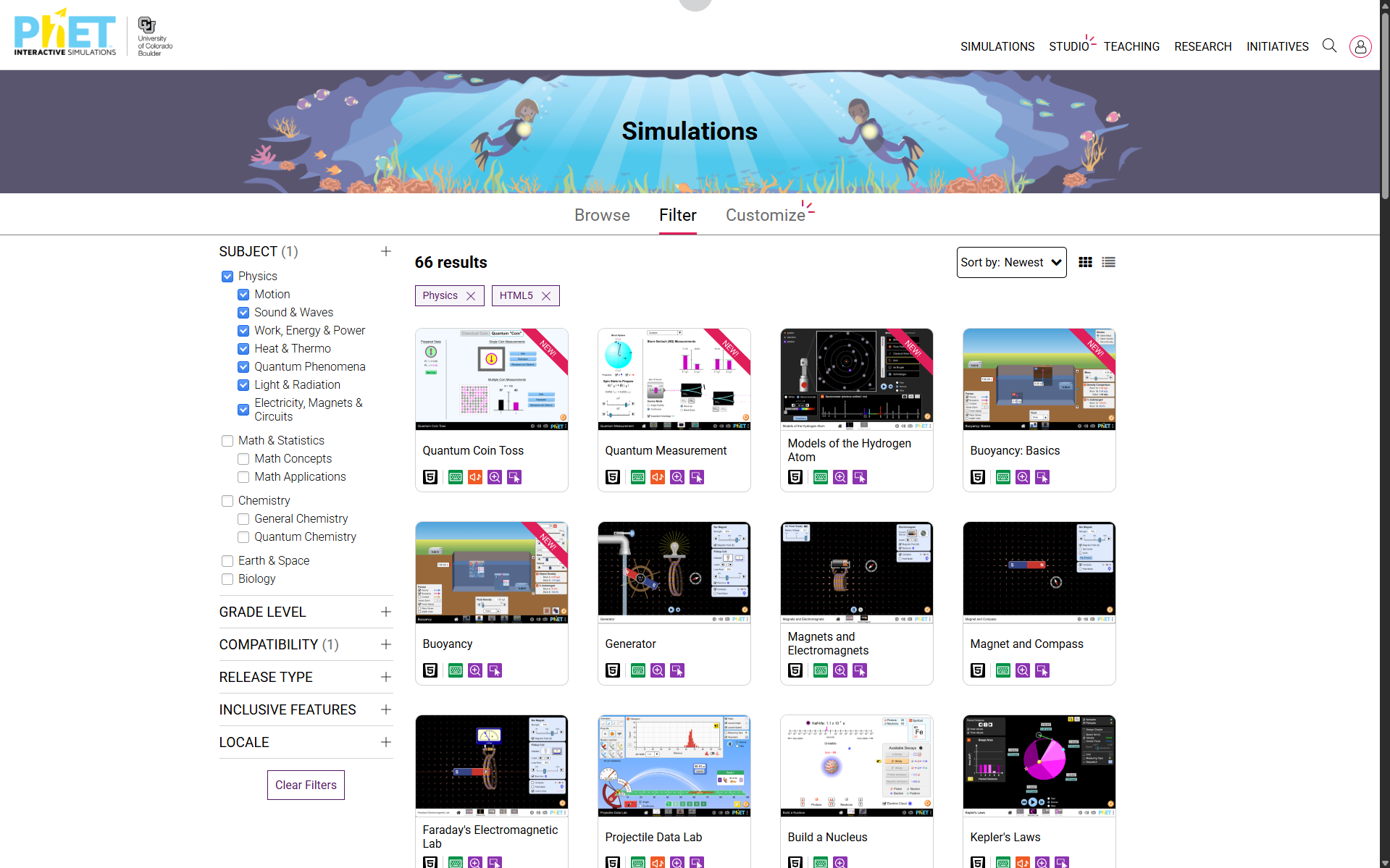
Screenshot taken from PhET Simulations and used for educational purposes only.
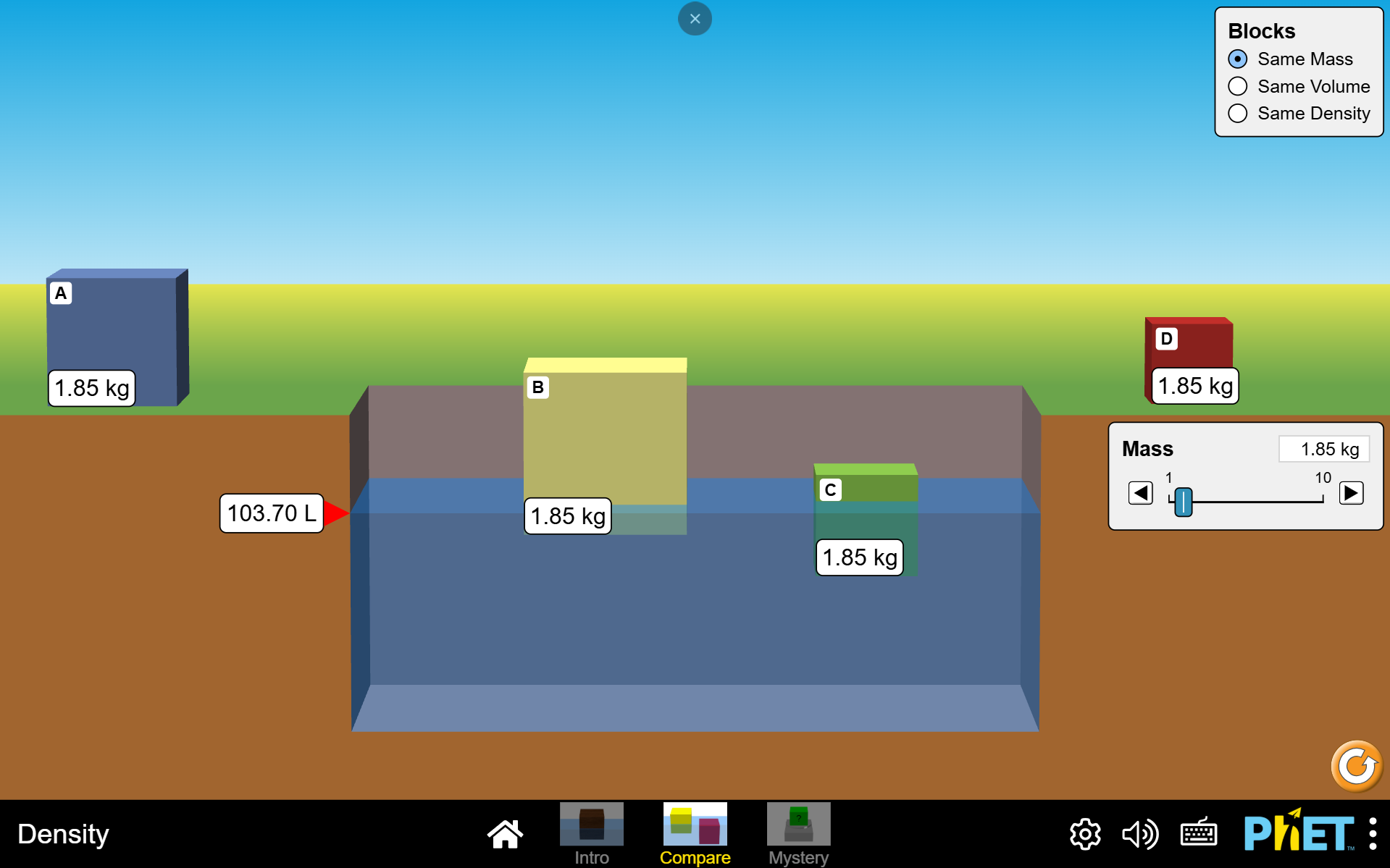
For reference, I have clicked on one of the simulations whose title is Density. This simulation will tell us how the density of things is affecting each other. How can we compare the density? By increasing the density, to what extent a block, which has been taken as an example, can sink in water, and to what extent it can float. In this way, all the details that are taught to us in high school about density are given here. Now, as soon as I clicked on the simulation, I saw a video play button in front of me. After clicking on it, I am directed to the new page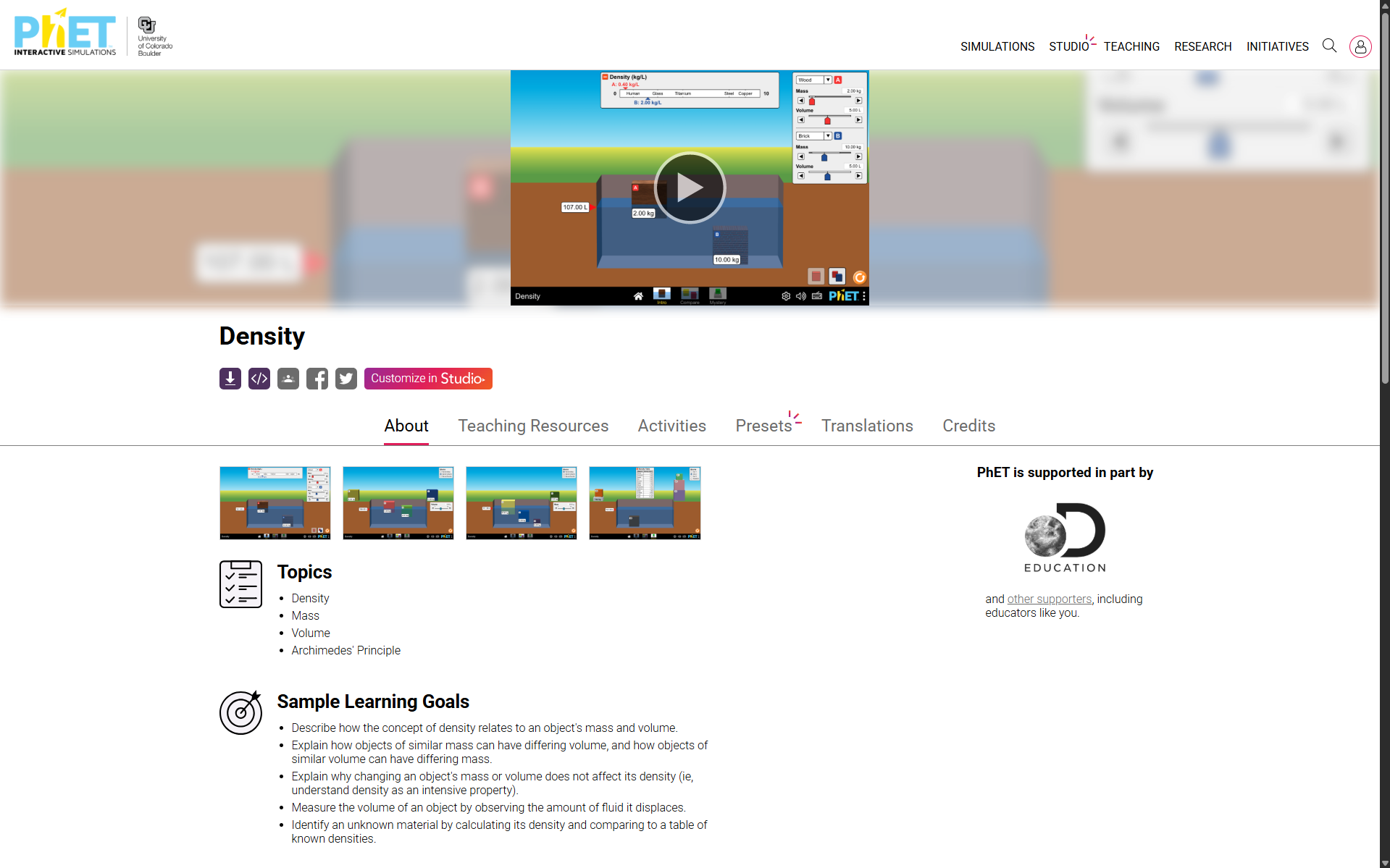
Screenshot taken from PhET Simulations and used for educational purposes only.
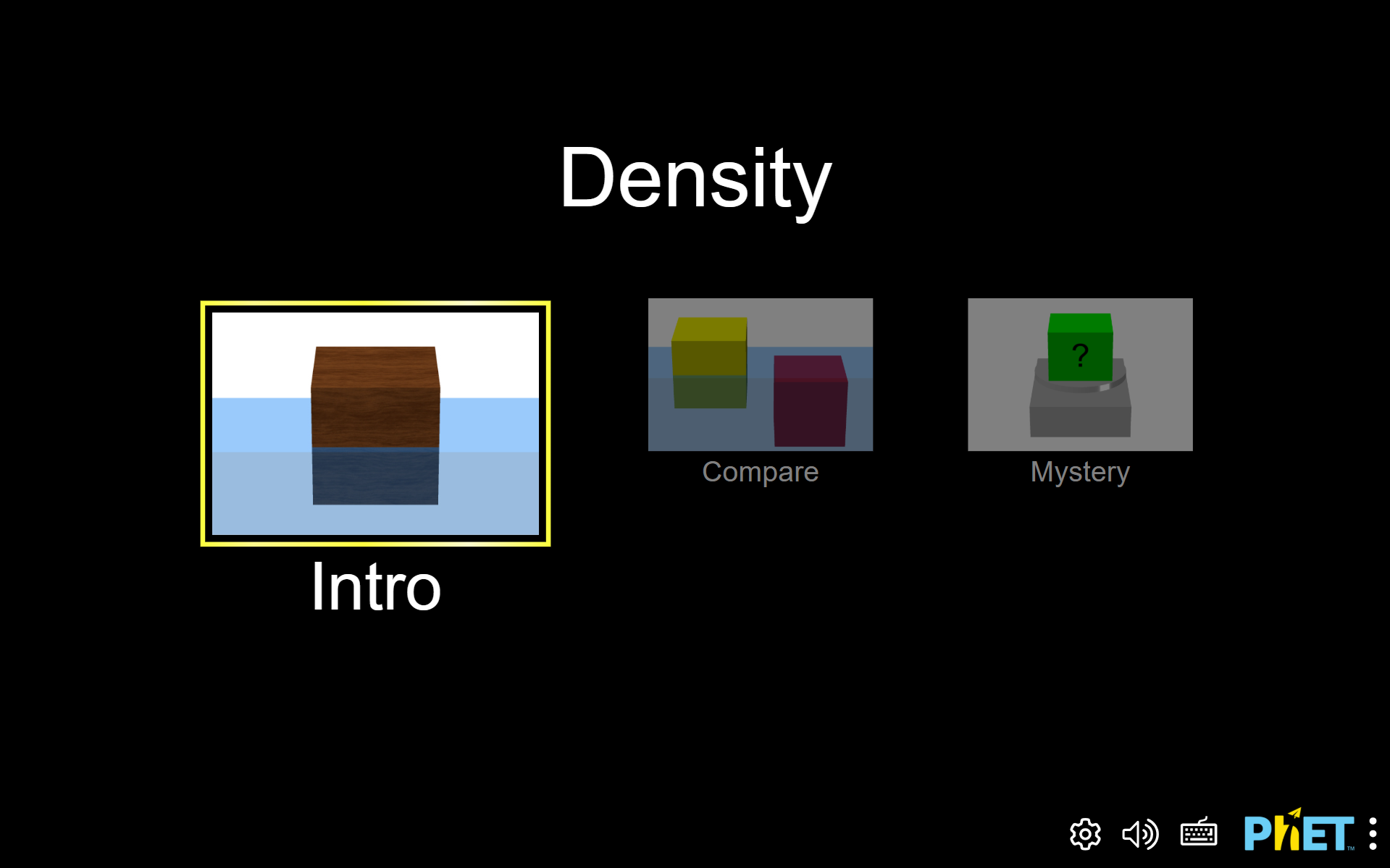
Now, as soon as the new page loads, I have three options in front of me. The first option is an introduction in which I will be told about density. In the second option, I can compare density. And in the third option, where mystery is written, I can know such facts about density that are really surprising. I am currently clicking on the comparison option.
Screenshot taken from PhET Simulations and used for educational purposes only.
Now, after clicking on it, I have four blocks. Two are lying in the water, and two are outside. Their weights are the same, but their height and width are different. Overall, their volume is different. Now, if you look carefully, the 1.85 kg B block is less submerged in the water compared to the 1.85 kg C block. This is how density affects us. It is like a game in which we not only learn science but also become able to apply it in our lives.
Screenshot taken from PhET Simulations and used for educational purposes only.
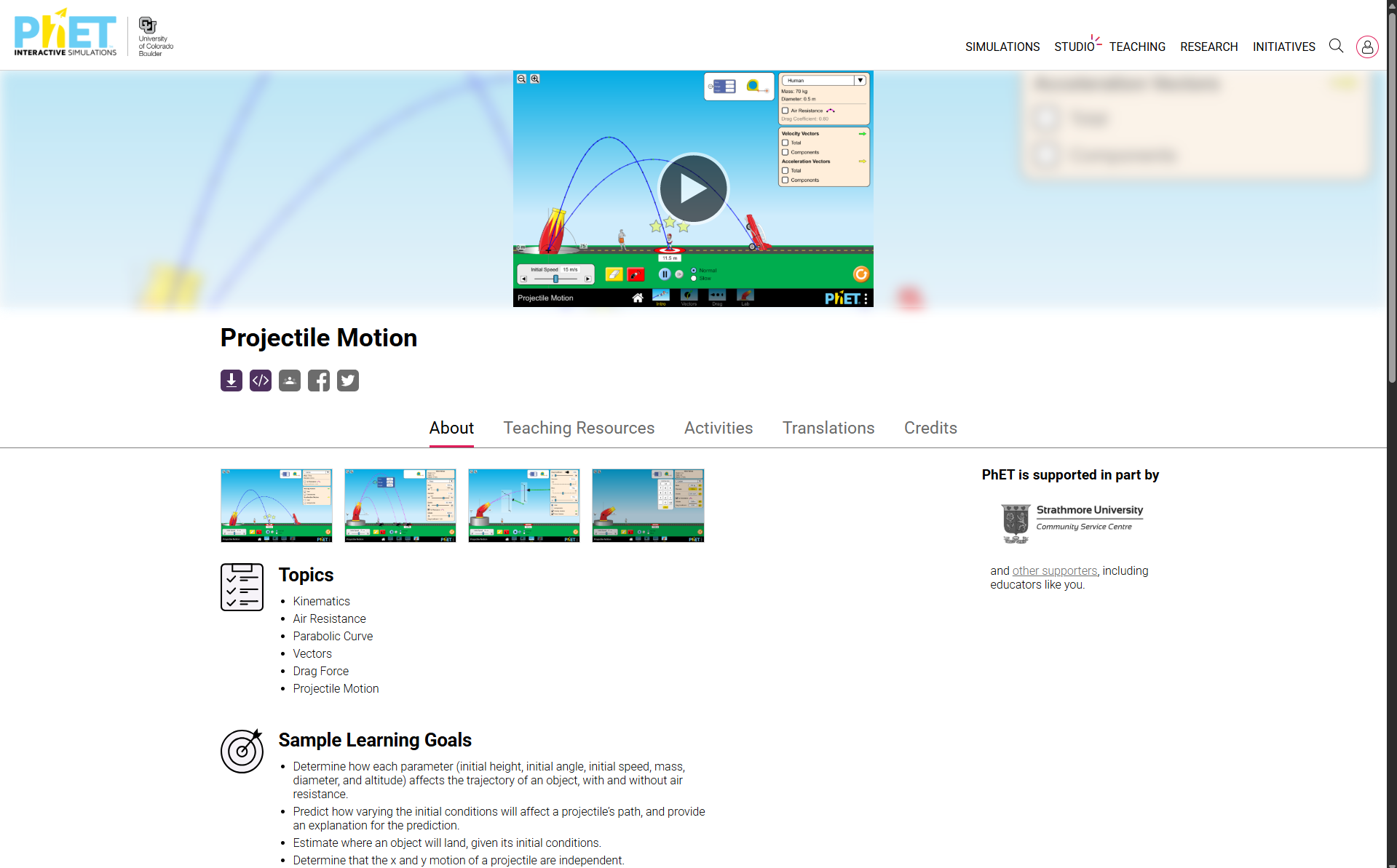
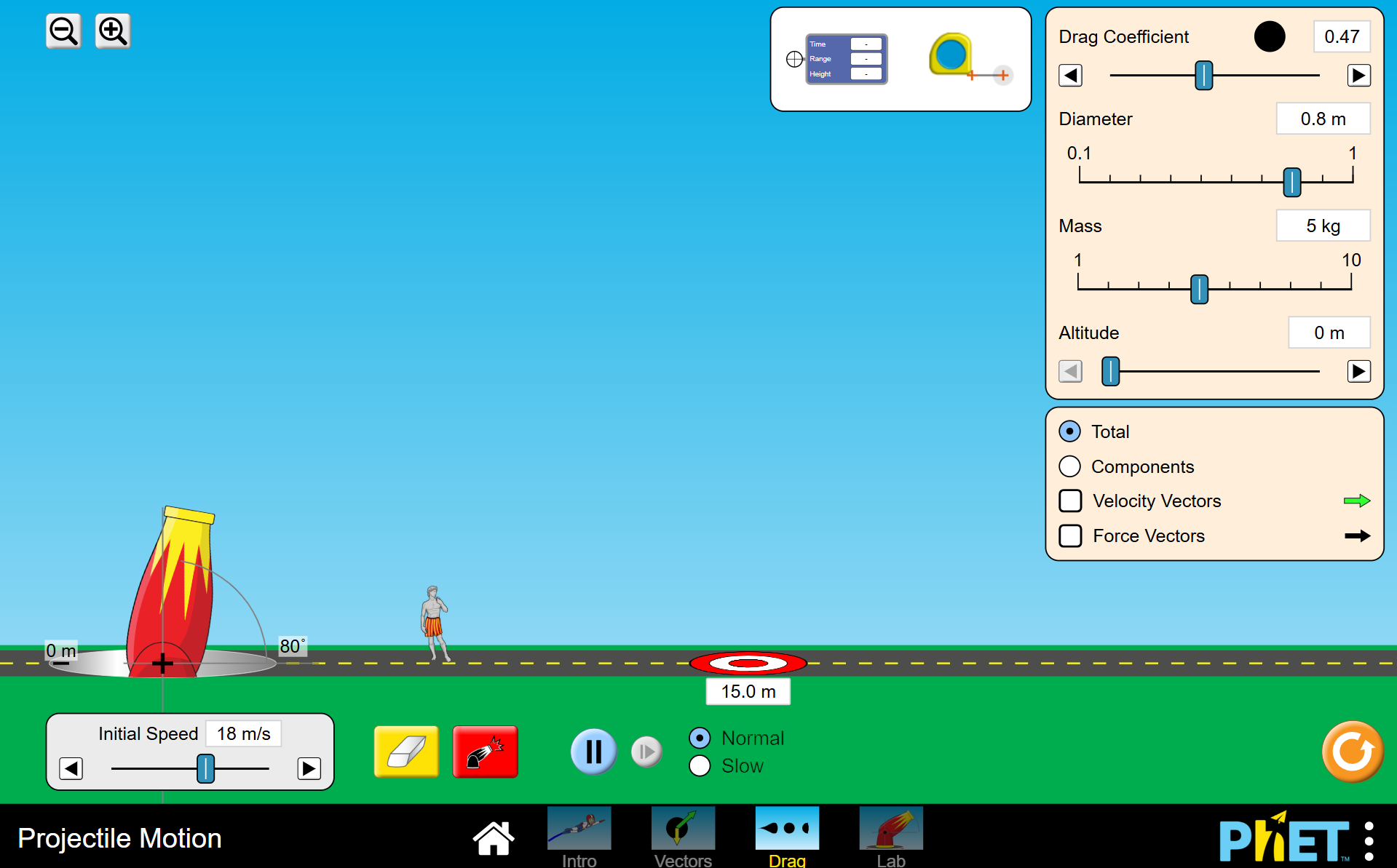
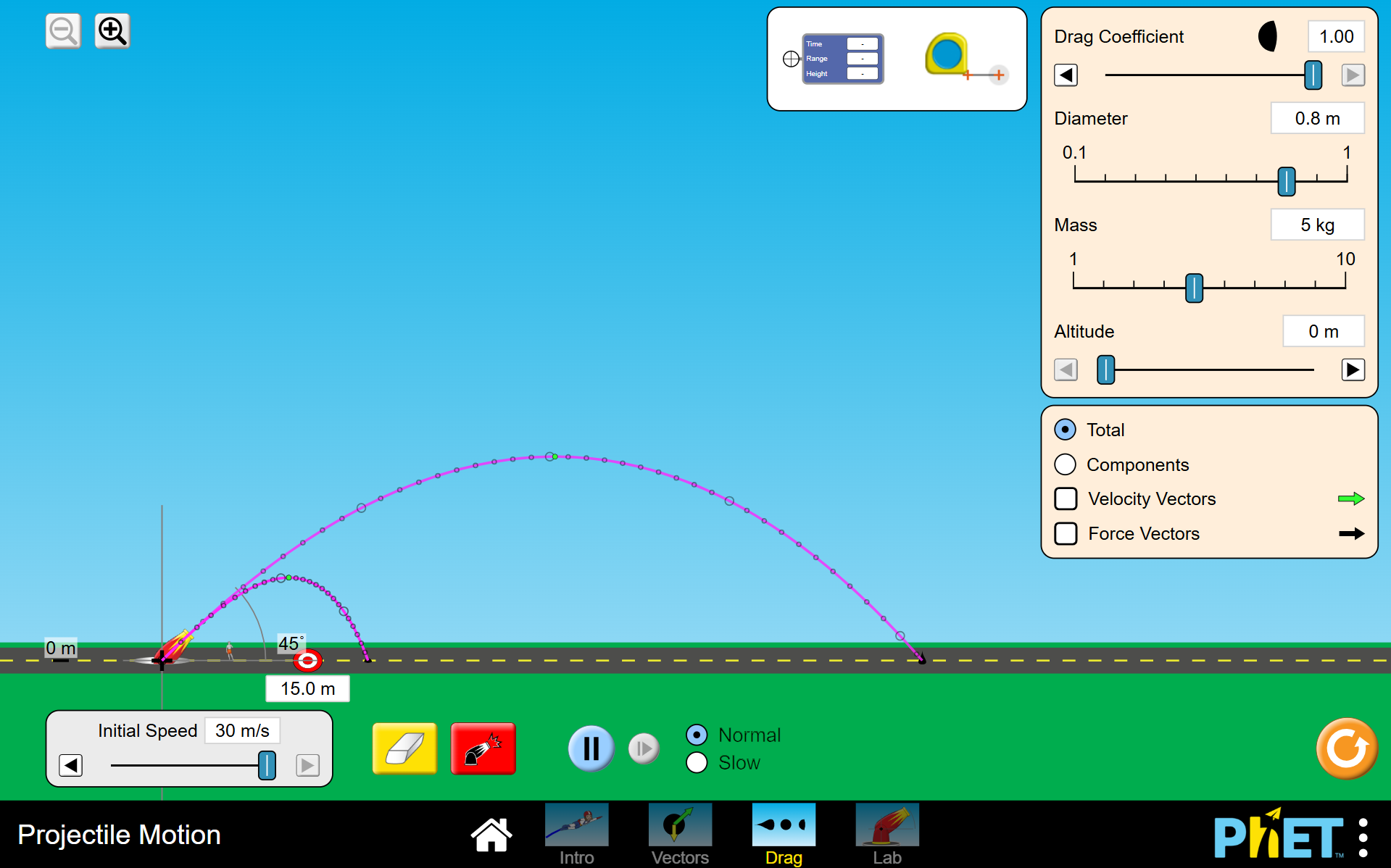
Now, let's take an example of a very famous experiment on projectile motion in which I have shown two bodies projected from the same velocity, diameter, mass, and most importantly, the same angle by increasing and decreasing the drag coefficient. Only their drag coefficient changes. To be honest, when I was studying in my high school, my teachers told me about the drag coefficient, but I could not get an idea of what this drag coefficient actually looks like and what term it is. But after visiting this website, I really realized that the drag coefficient is actually a sharpness caused by the friction of the air, which is created due to moving in the air around any liquid object.
Screenshot taken from PhET Simulations and used for educational purposes only.
Screenshot taken from PhET Simulations and used for educational purposes only.
Screenshot taken from PhET Simulations and used for educational purposes only.
Well, this is a great, amazing website, and I think there is probably no better website on the entire internet. The procedure is very easy. The link is given below. You can go directly to this website by clicking on it. This is a non-profit website. There is no hope of spam or any kind of data theft or hacking. I cannot give any guarantee about this, so that's all I get for today's post.

 571.030 SRY