
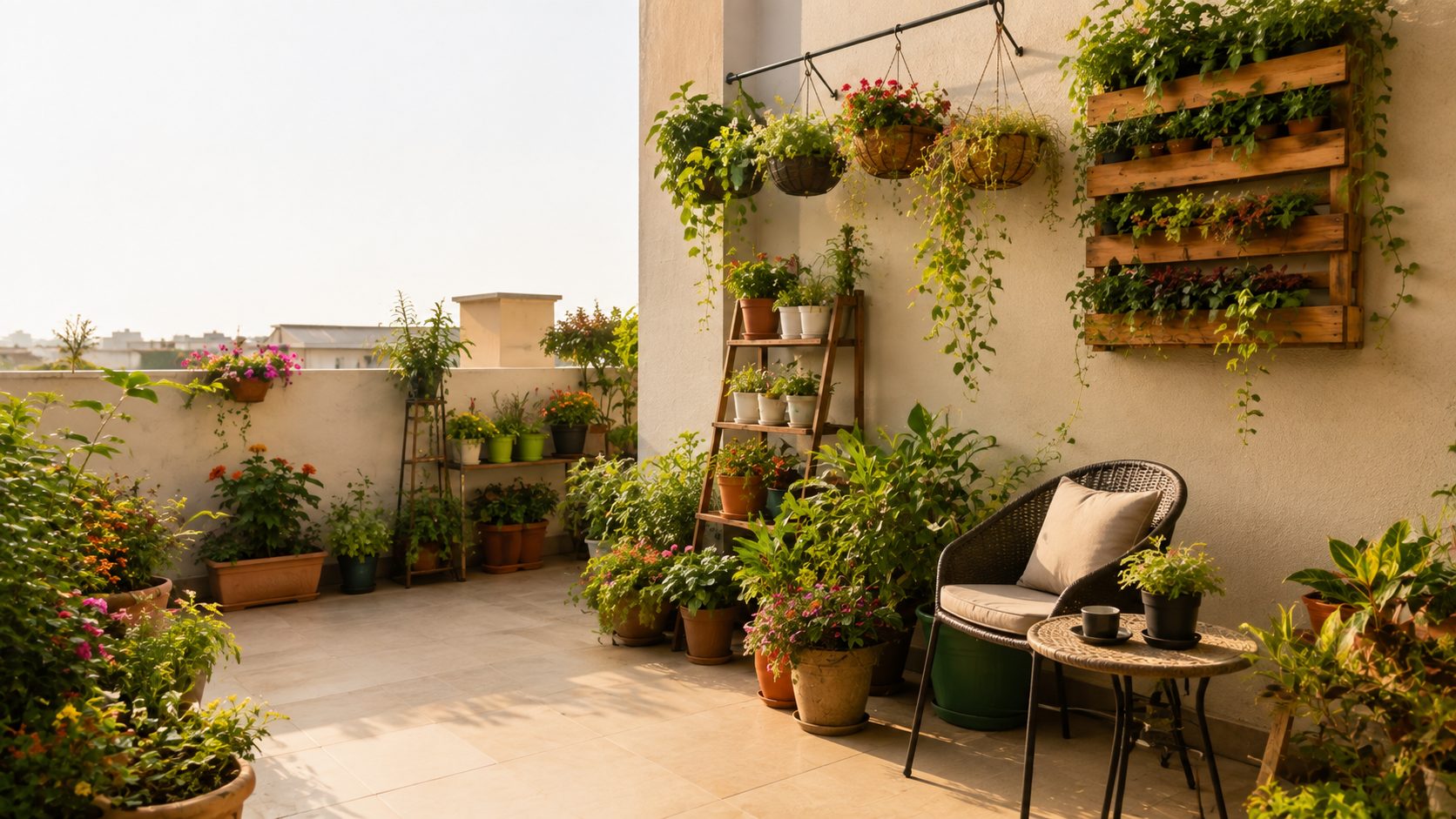
A terrace doesn't have to be large to become a beautiful garden. Even a small rooftop can be transformed into a relaxing green corner with the right plants, containers, and a little planning.
The challenge is making the most of limited space without making the terrace feel crowded. Instead of filling every available corner with plants, focus on choosing suitable varieties and arranging them thoughtfully.
Here is a simple approach to creating a beautiful terrace garden, even when space is limited.
1. Understand Your Terrace First
Before buying plants or pots, spend some time observing your terrace.
Notice which areas receive direct sunlight and which remain shaded. Also consider wind exposure, access to water, drainage, and how much space you actually want to dedicate to gardening.
Sunlight is particularly important because different plants have different light requirements. Some terrace plants can handle several hours of direct sun, while others perform better with partial shade.
Understanding these conditions first will help you choose plants that are more likely to thrive.
2. Choose Plants That Suit Your Space
When space is limited, plant selection matters more than the number of plants you have.
Choose plants based on the amount of sunlight, available container space, and the amount of maintenance you can realistically provide.
Flowering plants can add colour, while foliage plants can provide a lush green appearance. Herbs and vegetables can also be useful if you want your terrace garden to be both attractive and productive.
For inspiration, Balaji Nursery has a useful guide to plants suitable for terrace gardens, including palms, crotons, jasmine, ixora, marigolds, bougainvillea, aloe vera, and syngonium.
3. Use Containers Wisely
Containers are one of the easiest ways to garden when you don't have a traditional garden bed.
You can use pots of different sizes depending on the plants you want to grow. Smaller containers work well for herbs and compact plants, while larger varieties may require deeper containers to accommodate their roots.
Make sure the pots have drainage holes. Good drainage helps prevent excess water from remaining around the roots.
You don't need dozens of different pots either. A simple collection of containers with complementary shapes or materials can create a more organized appearance.
4. Make Use of Vertical Space
When floor space is limited, look upward.
Vertical gardening can help you add more greenery without taking up much additional floor area. Wall planters, hanging baskets, trellises, and plant stands can all help you use unused vertical space.
Climbing plants can also be trained along a suitable support structure to create a natural green wall.
Just make sure that the structure is secure and that the terrace can safely support the containers and equipment you're using.
5. Create Different Levels
Placing every plant at the same height can make a small terrace look flat and crowded.
Instead, create different levels. Put taller plants toward the back or along the edges and smaller plants closer to the front.
Plant stands, shelves, raised containers, and hanging planters can help create visual layers.
This arrangement makes it easier to see individual plants and can give the garden a sense of depth without requiring more floor space.
6. Choose the Right Soil and Drainage
Healthy soil is essential for container gardening.
Use a suitable growing medium that provides nutrients while allowing excess water to drain away. Different plants may have different soil preferences, so check their requirements before planting.
Drainage is particularly important on terraces. Water that doesn't drain properly can create problems for plants and may also cause issues for the terrace itself.
Keep drainage outlets clear and avoid allowing water to accumulate around pots.
7. Create a Simple Watering Routine
A terrace garden may dry out faster than plants growing at ground level because containers are exposed to sunlight and wind.
However, that doesn't mean every plant needs to be watered every day.
Check the soil before watering. If the soil is still moist, you may not need to water immediately. Plants with different water requirements should also be treated differently rather than following one watering routine for the entire terrace.
During hot or windy weather, pay closer attention to moisture levels.
8. Mix Colours and Textures
A beautiful terrace garden doesn't need hundreds of plants. A thoughtful combination of colours and textures can have a much greater visual impact.
Try combining flowering plants with plants that have interesting foliage. You can also mix different leaf shapes and heights to make the garden feel more dynamic.
For example, bright flowers can provide colour, while taller palms or foliage plants can create structure and a sense of privacy.
The goal is to create balance rather than simply adding as many plants as possible.
9. Keep Maintenance Manageable
A garden should be enjoyable rather than becoming another daily chore.
If you have limited time, choose plants that match your maintenance routine. Regularly remove dead leaves, check for pests, inspect the soil, and prune plants when necessary.
It's also a good idea to group plants with similar care requirements together. This makes watering and general maintenance easier.
Start with a few plants and expand gradually as you become more comfortable caring for them.
10. Add a Small Relaxation Area
If your terrace has enough room, reserve a small section for yourself.
A compact chair, bench, floor cushions, or a small outdoor table can turn the garden into a place where you can read, enjoy your morning tea, or simply take a break.
You don't need elaborate furniture. Even a small seating area surrounded by greenery can make the terrace feel more inviting.
Final Thoughts
Creating a terrace garden in a small space is mostly about making thoughtful choices.
Start by understanding your terrace's sunlight, wind, drainage, and available space. Then choose plants that suit those conditions, use containers efficiently, take advantage of vertical space, and keep your maintenance routine simple.
You don't have to create the perfect garden on the first attempt. Start with a few plants, observe how they respond, and gradually build your terrace garden around what works best.
With a little planning, even a compact terrace can become a peaceful green space that adds colour, freshness, and character to your home.

 0.000 SRY