

More than 100 years ago, a man dreamed of what could be the Web.
As various scientists have shown, the idea of something similar to the modern Web has raged well in people's heads. Many scientists and futurists have mentioned the possibility of a large data store (library) that would be available from every human home.
The beginnings of the Web can be traced back to the 20th century. at the beginning. In 1895, the Belgian bibliographer and entrepreneur Paul Otlet, along with the next Nobel Peace Prize winner Henry Lafonten, started a project called Universal Bibliography.
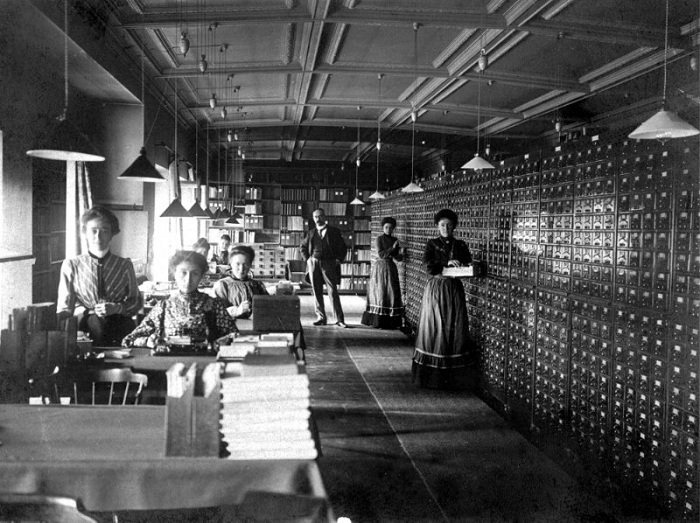
Its purpose was to create a database containing world-wide information, including books, articles, movies, audio recordings, and photos. More than 15 million index cards were created using the Universal Decimal Classification.
The information repository was attempted to be made available to people via telegraph in the form of "question-answers". Of course, for a small fee.
Otlets continued to pursue the idea of attracting architects, philosophers and sociologists from Austria, Scotland, Switzerland and Norway to gather information. This team created a global newspaper archive, an international network of associations and a 150-room Palais Mondial museum with exhibits on science and history.
From his 1935 book "Monde":
>Everything that happens in the universe and with people will be recorded remotely. This will create a moving world image, a true mirror of its memory.
> At a distance, everyone will have the opportunity to read text, enlarge and see only the object they need by projecting on an individual screen. In this way, everyone sitting in a chair will be able to watch everything in full or in detail.
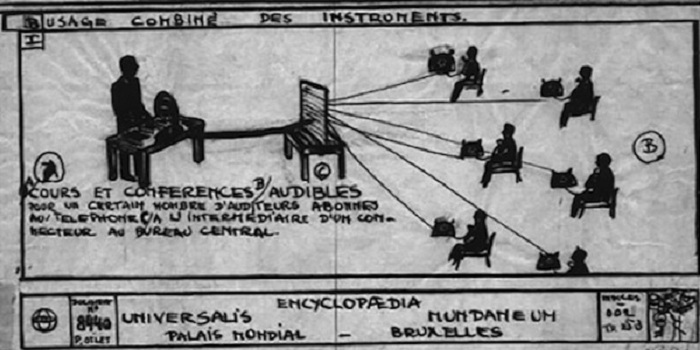
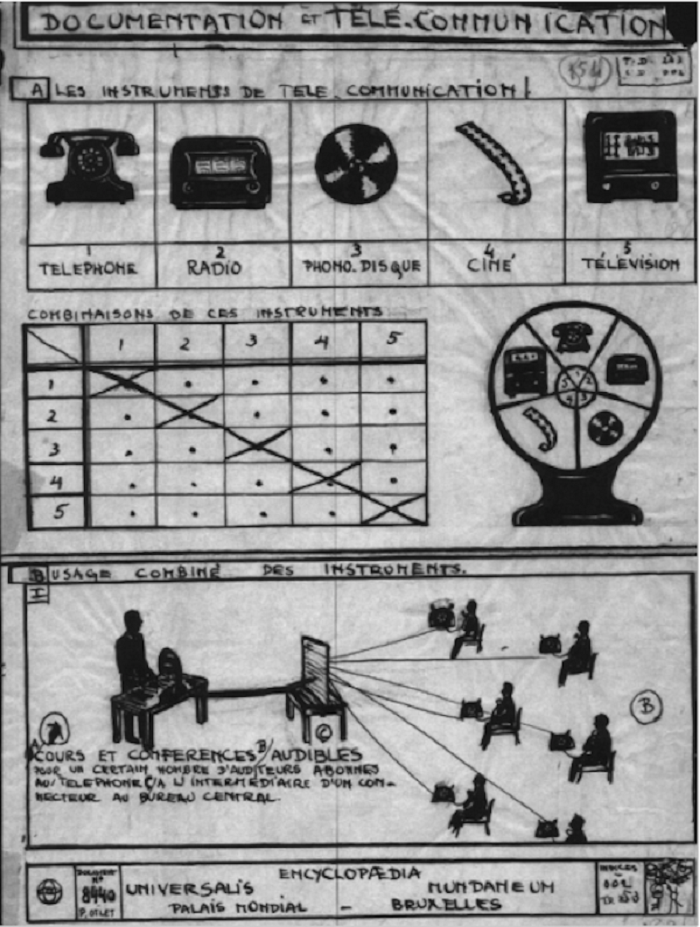
He also wrote about storing data in the form of films containing documents that people could search and view using a linking system similar to hyperlinks. Otlets died in 1944 and there is no direct evidence to link him to any of the networking concepts. All that is available is these drawing, which might outline what we now call web servers.
Some information and pictures from: google.com search and https://www.wikipedia.org/

 0.000 SRY