

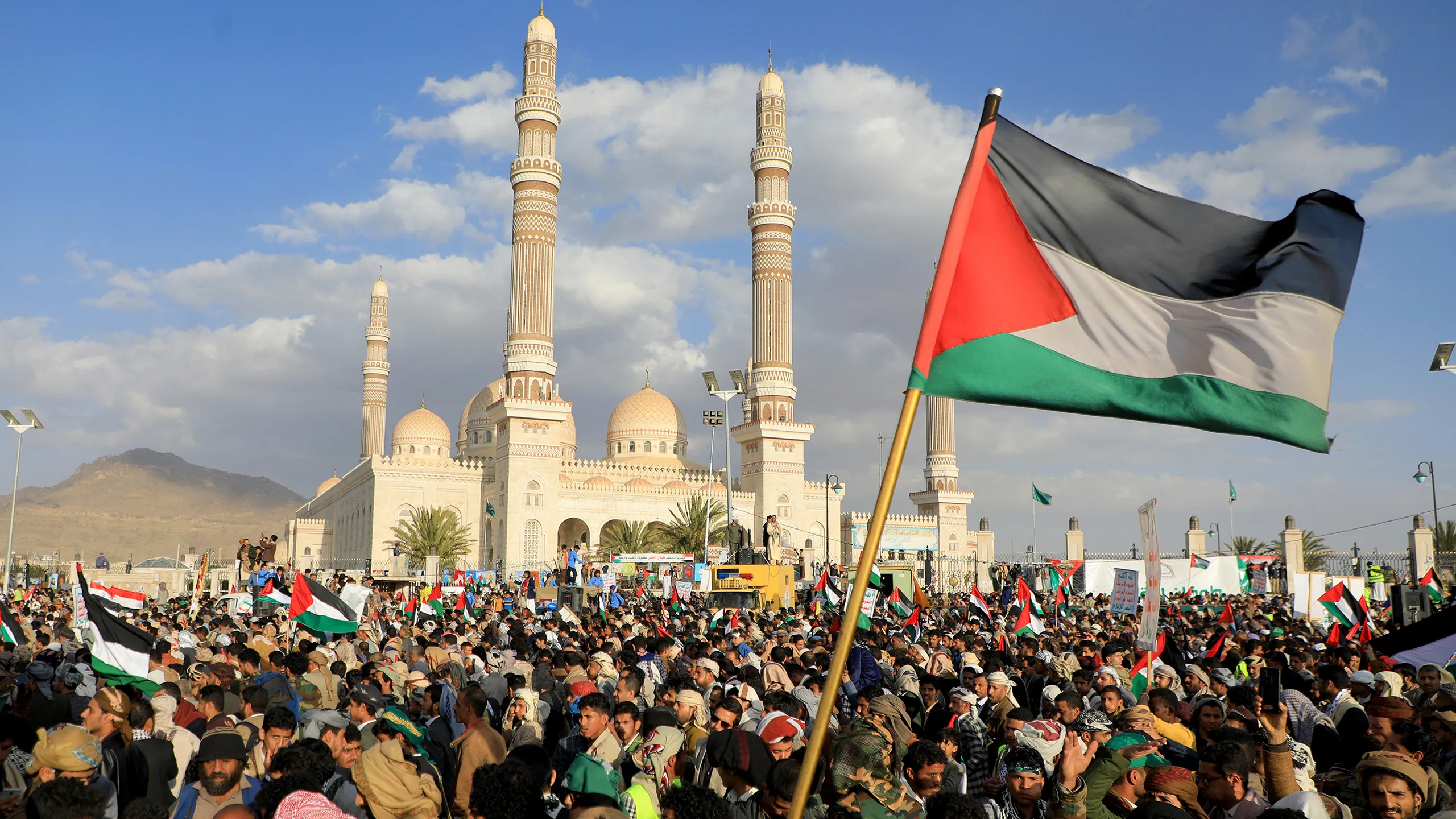
The killing of the leader of Hamas in a hotel in the Iranian capital, Tehran, has increased tensions in the Middle East. Iran and its proxies Hamas, Hezbollah and Houthi have announced retaliation for multiple Israeli attacks in Lebanon and Iran amid ongoing Israeli attacks on Gaza. This has created a fear of increasing the conflict in the Middle East.
The new presidents had plenty of time to deal with the decades-long nuclear standoff with Iran, strikes against enemies and lifting sanctions with the West. But the country's new president Masoud Pezheshkian got only 10 hours. Within hours of being sworn in as president, Hamas leader Ismail Haniyeh was killed in a 2 am attack on a hotel by the powerful Revolutionary Guards in the country's capital, Tehran. Haniya, the leader of the political wing of the Palestinian independence organization Hamas, was received in Sadre by Iranian President Pezeshkian and the country's supreme religious leader, Ayatollah Ali Khamenei. On their part, this attack has been commented as a shameful act of Israel.
Pezeshkian and Khamenei's top military officers had no choice but to attack Israel. Pezeshkian therefore spent his first day in office conferring with national security officials. The final decision has been announced by them last Wednesday. Iran's Supreme Leader Ayatollah Ali Khamenei has ordered a direct attack on Israel to avenge the killing of Haniya.
Earlier, after Haniya was killed, Ayatollah Ali Khamenei gave a message of revenge in an X message. He wrote, "It is our duty to take revenge after the bitter and sad incident that happened within the borders of Iran."
Iran launched an attack on Israel last April. However, a coalition of four countries (United States, Israel, Jordan and the United Kingdom) were able to destroy 99 percent of Iran's 300 drones and missiles in the air at that time. How Iran wants to retaliate this time can make the difference in this conflict. If Iran launches a direct attack like it has in the past, tensions will escalate.
If Hezbollah, the Lebanese armed group close to Iran in the Middle East, attacks northern Israel, or if the Syrian Houthis increase their offensive in the Red Sea, the war will spread further into Lebanon and Syria. For more than 9 months, there has been a series of cross-border clashes between the Lebanese armed group Hezbollah and Israel. At this time, Hezbollah used various weapons to attack Israel. Hezbollah, one of the world's non-state armed groups, has a huge arsenal of weapons. Hezbollah is said to have the largest stockpile of weapons among non-state groups. In this case, the US Navy will have to intervene to keep ships moving in the Red Sea.
Apart from this, Iran has another risky option. That is, to start the work of making their nuclear weapons. They have walked this path for decades. They have enriched their uranium stockpile to make nuclear fuel and, more recently, to make bombs. However, US intelligence believes that Iran is still lagging behind in developing nuclear weapons. But Iran's leaders have recently said publicly that they are considering walking down that path directly.

 3008.445 SRY