
Hi Guys!
Not quite at home: Pakistan still learning the ropes of playing in Pakistan
Years of "home" games in the sun-baked UAE could hardly form the template for Test cricket on wintry Multan mornings, but this squad has little else to draw on
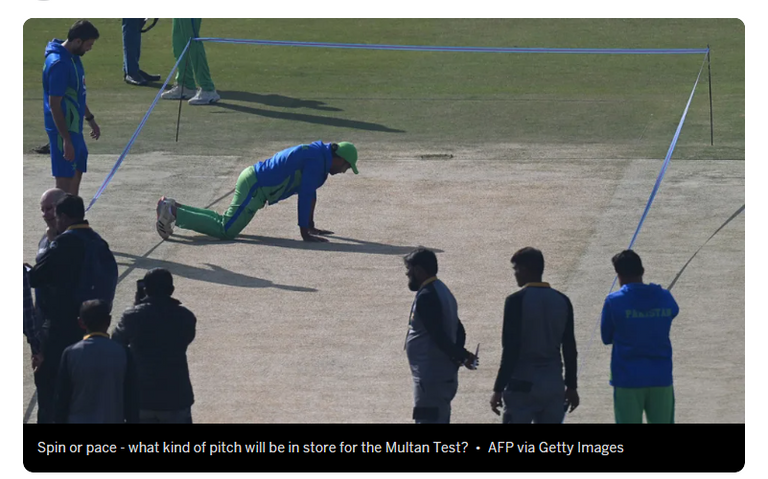
You know the initial feeling of disquiet when you move back home after a few years away? It's the unfamiliarity of surroundings that should, in theory, feel perfectly natural, and yet there's enough that's ever so slightly off to refuse to allow your brain to truly relax. Perhaps the TV in the living room isn't working, maybe the comfortable leather chair isn't where you left it. None of it is especially offensive, but you know there are matters to be tended to before all systems are up and running, and you can truly feel comfortable. Perhaps you've returned home from university, or work in another city. Or perhaps, like the Pakistan cricket team, you were forced away from home for a decade owing to issues well beyond your control.
The response to last week's limp defeat against England, though, reveals how unfamiliar Pakistan still feels to this, well, Pakistan side. Babar Azam had criticised the Rawalpindi surface for failing to meet the home side's expectations, but said he expected the Multan pitch to take a lot more spin.
"It looks as if it'll be a turning wicket," Babar said. "The wicket is dry, and the way it's behaving, I feel it'll help both spin and reverse swing. Our main focus is on the spinners though, and that's what we're looking to utilise."
This could have been Misbah-ul-Haq from a few years ago, talking about Abu Dhabi rather than Multan. But the foundation upon which Misbah's game plans were set are a lot less established for Babar's Pakistan side. For one, it remains unclear whether South Punjab's watery winter sunshine can produce the same wicket the UAE's baking heat would have allowed. Misbah's utilsation of his spin attack was immaculate, as was his near-perfect clarity of thought about what he wanted out of his Test side in the UAE. Whether it's conditions or tactical nous, Babar is still a fair way away from matching that.
Even if he did, though, it isn't immediately obvious that quality spin is Pakistan's competitive advantage over England. Zahid Mahmood conceded more runs on debut last week than any bowler in history and his first-class form doesn't suggest much different. Abrar Ahmed, though impressive in the first-class Quaid-e-Azam Trophy, is yet to make his debut, with allrounder Mohammad Nawaz the left-arm option. Sajid Khan and Nauman Ali, the two spinners Pakistan used against Australia, struggled to have an impact, and there's little to follow after them that might indicate the bounties of the UAE era are anywhere close to imminent.

By contrast, England's leading spinner Jack Leach has played twice as many Tests as all three combined, and is two wickets away from 100 Test wickets. He has operated as England's lead spinner in the West Indies, Australia, India and Sri Lanka, and took ten wickets in a Test in a recent series win at home over New Zealand. He took the final wicket under the setting sun in Rawalpindi last week. If Pakistan do indeed get the pitch they're after, there's little to indicate Leach wouldn't be the biggest beneficiary.
A turning pitch might of course serve as a carapace against the destructive power of England's batting line-up, levelling the playing surface by making attacking shots even more high-risk. But Pakistan haven't yet created a home template they can be comfortable with, and the security blanket of what their predecessors did in the UAE is too tempting not to reach for. The insecurity is perhaps natural for a side that hasn't yet established a clear Test identity like Misbah's UAE team did, as is the desire to try and recreate the only successful template this crop of Pakistan players has seen.
Having been supremely successful in building a home away from home, Pakistan seem to be struggling to recall what they enjoyed about home in the first place, in the years before 2009, before circumstances pushed them out into the Arabian desert. It might be down to the youth of this side; no one from Pakistan's current squad played international cricket in Pakistan before 2009. As such, there's little to fall back on when Pakistan need to return to basics, as they might feel they do now after four winless home Tests; there was never a longer barren streak during Pakistan's entire time in the UAE.
What this generation of Pakistan players do understand is what worked in the UAE, and the staggering success Misbah's side enjoyed in a country that held little for Pakistan's most prized skill: fast bowling. They will remember, instead, how Misbah weaponised a template that let loose Saeed Ajmal and later Yasir Shah, two of the most prolific spinners in the generation just gone. They will recall the multiple series wins against England, the outstmarting of South Africa and the hammering of the Australians. It became Pakistan's brand, the new normal. Pakistan's fast bowling suffered as a result but while they didn't lose a "home" series for seven years, there was enough paper to go round to cover the cracks.
But time at university or work invariably draws to a close, and then home beckons. For Pakistan, that should have been a moment for uncomplicated joy given the circumstances that drove them out. But on the field, it was a little more complicated. Having spent most of their emotional energy ensuring they got back home, the idea of what they might do once they got there was rather more nebulous.
A tidal wave of emotion, and the fact a relatively feeble Sri Lanka and Bangladesh were the first two touring sides, ensured Pakistan won the two Tests it was realistically possible to get a result in (the first Test against Sri Lanka was weather-impacted). Naseem Shah took a five-for in one Test, a hat-trick in another. Shaheen Afridi and Mohammad Abbas complemented each other and found wickets, while Azhar Ali tactfully spoke of Yasir Shah's "changing" (read: diminished) role in the side.
When South Africa, the first real Test at home arrived, Pakistan found themselves at their best. Hasan Ali timed his purple patch perfectly to run through the visitors at crucial times, with Afridi at his effervescent best. The surfaces were designed to produce results, and both matches did - Pakistan triumphing each time.
But Pakistan were also a team in transition and, again, victories can be especially effective at masking bumps in the road. Yasir's plummeting form and off-field problems began to reveal how bereft Pakistan's spin depth actually was, with the leading spinners in the Quaid-e-Azam Trophy looking palpably out of their depth when summoned to the national side.
That this volte-face should happen in Multan - a city that's hosted so little Test cricket that it would feel unfamiliar to even the most seasoned Test cricketers - is perhaps apt for a Pakistan side who might have returned to Pakistan a few years ago, but are still figuring out how to feel at home.
Naseem Shah under injury cloud ahead of Multan Test
This increases the chances of a debut for Mohammad Wasim jnr as Pakistan attempt to level the series against England

Naseem Shah's availability for the second Test against England in Multan is in significant doubt with an ongoing shoulder niggle, first sighted during the Rawalpindi game. This has put a further strain on Pakistan's pace bowling resources, as they are already without Shaheen Shah Afridi and Harris Rauf, who debuted in the first Test but injured his quad and is now out of the series.
Naseem was Pakistan's standout bowler in Rawalpindi, but with the rest of an attack pummelled by England's batters, his five wickets made minimal impact. At one point in England's first innings though, he threw in a ball from the boundary awkwardly, as if protecting the shoulder. He continued bowling through the rest of the Test, however, holding his shoulder occasionally but looking largely untroubled. The niggle has carried into Multan, however, and Naseem didn't bowl at all in training on Thursday.
Pakistan had toyed with the idea of calling up Hasan Ali after Rauf was ruled out but have ultimately decided against it. It increases the chances of a debut for Mohammad Wasim jnr who along with Mohammad Ali - who debuted in Rawalpindi - are the only specialist fast bowlers left in the squad. Pakistan do also have Faheem Ashraf, the allrounder whose bowling has often shored up their pace attacks. Wasim has only played seven first-class matches and like Rauf - who had played eight first-class games before debut - has been a more regular part of Pakistan's white-ball teams.
Babar Azam said at today's press conference in Multan he expected the pitch to take turn, and Pakistan are expected to rely heavily on spin for wickets during this Test. In Rawalpindi, Pakistan only played one spinner in Zahid Mehmood, but are expected to field allrounder Mohammad Nawaz as well as legspinner Abrar Ahmed in Multan. Left arm orthodox spinner Nauman Ali is also part of the squad.
Naseem sustained a similar shoulder injury during a stint in the County Championship in April, only bowling 11 overs on his Gloucestershire debut before suffering the injury. It was to remain his only County Championship involvement all season.
Why does Ramiz Raja think Pakistan have a problem with their pitches?
Surfaces have not been bad there historically. Ironically, they have been since he became chairman

Good. Very good. Good. Below average.
In order, oldest to latest, those are the ICC ratings for Rawalpindi pitches in the four Tests Pakistan have played there since Test cricket returned to the country in December 2019, excluding the last, against England.
That first Test was ruined by rain but the two subsequent ones, against Bangladesh and South Africa, were played on pitches designed to reap results, which they did. They weren't rank turners or green mambas, though there was enough grass on the surface against Bangladesh for Pakistan to talk publicly about moving on from the UAE spin era. In both games there was movement for the new ball off the surface, there was a period when batters could feel settled, there was bounce, there was purchase for spin, there were runs to be made, and there was reverse swing. In short, the contest between bat and ball was fair and compelling.
Between that match and this England Test, Rawalpindi hosted seven Quaid-e-Azam trophy games in which wickets came at a cost of 32.4 and a strike rate of 60.38. Fast bowlers took 142 wickets at 32.6, spinners 66 wickets at 30. In the last of those games, a month ago, Mohammad Abbas took seven wickets for Southern Punjab and the mystery spin of Abrar Ahmed eight wickets for Sindh. In short, the contest between bat and ball in those games was fair and compelling. Then came this England Test, which, like that Australia Test, provided a grossly unfair and off-putting imbalance between bat and ball.
That England secured a win on the final day should not mask what an abomination the surface was. It took one of their greatest performances ever to eke out a result, otherwise the pitch was made purely to secure a draw for Pakistan. The two Test surfaces, in other words, have been nothing like those from a couple of years ago or even, more recently, those of this domestic season. Nasser Hussain said the pitch didn't deserve to have the players it had on it.
Ramiz Raja, the PCB chairman, also condemned the surface, calling it "embarrassing". In various media interactions, Ramiz also said that it would take anywhere from a season to several years to fix pitches; that Pakistan were in the dark ages as far as pitch preparation was concerned.
Ordinarily such comments might get a pass. He is the chairman. Foreign media are in town. He is an easy content provider. He is bilingually perfect, because he speaks English but also the language of the media, made up of buzzwords and clichés. The pitch is so awful it needs accountability. This is the ceremonial dance of chairmanship.
Except, in Ramiz's case, those comments cannot pass so easily. As well as being alarmist, the idea that Pakistan cannot produce good pitches is more than a little disingenuous, because as those ICC ratings suggest, Test pitches have been this bad only since Ramiz became chairman. It's surprising he doesn't remember Rawalpindi producing good surfaces because he was commentating on those games before he became chairman. In the daily analysis he did for his YouTube channel, he praised the surface for the Test against South Africa, not least on day four when he said the curator had prepared a shaandaar, or brilliant, surface with something in it for everyone.
If such a shaandaar surface could be produced as recently as February 2021, why should it take years to produce another surface like that - or at least a surface less like the one this England Test was played on? Why should it take so long and be seen as so difficult to produce better surfaces when the evidence of this first-class season in Rawalpindi says that there is not much work to be done?
It shouldn't, is the short answer. The only reason the last two Test surfaces in Rawalpindi have been so poor, so lifeless, is because Pakistan have wanted them that way, not because there is something inherently wrong with them. The problem is not the pitches but the conservative mindset among the leadership of Pakistan cricket.
Earlier this year Ramiz all but admitted that the Rawalpindi pitch had been flattened to neutralise Australia's attack. After the England loss Babar Azam said this was not the pitch Pakistan wanted, even though they had "a lot of input" into what they wanted. They wanted a turner, though the deed of picking just one spinner from a squad of three - and not a spinning allrounder who was Pakistan's leading wicket-taker in their last Test series - rather belies those words.

Ordinarily, most board chairmen would not be as fixated on pitches as Ramiz appears to be. He brought in a curator from Australia for a ten-day stint ahead of the third Test of that series. Nobody is sure what purpose that served. He brought in another Australian curator in July, this time for local curators to pick his brains about pitch preparations. (He has little faith in local curators clearly: in a previous stint as board CEO, he brought in Andy Atkinson to help prepare pitches for a series against India.) He's been keen on bringing drop-in pitches to Pakistan, though that plan has had to be put on hold because of the expense involved in shipping them in. Now he wants to develop them in Pakistan.
The solution is questionable because drop-in pitches are useful usually in multipurpose venues, where cricket shares space with other sports. All of Pakistan's main cricket stadiums are under the control of the PCB and so will only be used for cricket. It is more questionable because, on the evidence of all Tests played in Pakistan since their return in 2019-20, it could be argued there wasn't a problem in the first place - until Ramiz took over.
Ramiz has already warned that similar surfaces will be seen for the rest of season, another two Tests against England and two when New Zealand visit. At which point, it is worth revisiting the three home series against Bangladesh, Sri Lanka and South Africa and asking: why?
Sure, Multan, where Pakistan and England now play, is a bit of an unknown in that this Test will be the first there since November 2006. Five of the seven first-class games there over the last two seasons have been drawn, though not in homogenous fashion. But Karachi, the venue for the last Test of the England series, has played out two Tests (before the one against Australia, under Ramiz's tenure) of compelling cricket: it spun more than some could ever remember on the first day of one and had seam movement and invariable enough bounce to keep batters honest on the first day of the other.
In one sense, it is understandable that Ramiz is so hung up on pitches. His USP when he became chairman after all was that he was a cricketer and what cricket needed more of was cricketers running it. Indeed, who else could run it better? And so, going by that platform, of course he will get in the weeds with pitches.
Except, if the state of Pakistan's Test pitches is anything to go by, the evidence is growing that it's not being run particularly well.
Little chance of conservatism from England as Pakistan search for bowling balance
It remains to be seen what happens to England's all-guns-blazing approach if Multan serves up a turner

Big Picture
Harder, faster, better, stronger. England have taken the Daft Punk approach to reviving their Test fortunes, not to mention reshaping the format as a whole. But how can you raise the bar after scoring close to 1000 runs at well above a run a ball, then crowbarring out the 20th wicket to secure one of the most-remarkable - and hardest-earned - victories in Test history amid the lengthening shadows of the final session on day five?
Ben Stokes, England's captain/nutty-professor-in-chief, has a few ideas on that front, but will be content for more of the same in Multan. England may be 1-0 up in the series, in a country where they have only ever won twice before, but there is little chance of conservatism creeping in - with allrounder Liam Livingstone invalided out of the rest of the series, Stokes and Brendon McCullum have opted to bring in a fast bowler, Mark Wood, to add to their cutting edge.
McCullum flagged at the start of the tour that his team would be chasing results, even that meant hustling themselves to defeat in the process. It helps that England's World Test Championship hopes were dead on arrival; and there is no better way to win a three-match series than to go 2-0 up after two.
But Babar Azam might be grateful to know that, like an undead horde, this England will just keep coming. Not because he enjoys the stress headaches brought on by having to set fields when England's batters are on the charge, but because that very impulsiveness might result in a slip-up that lets Pakistan back into the contest - particularly if the pitches to come are anywhere near as uncooperative as Rawalpindi.
Pakistan might need to discover a new spirit of adventure themselves, but they could start with selection and then go from there. The batters acquitted themselves well enough in the first Test, with hundreds for the captain and both openers, while the debutant Saud Shakeel top-scored with 76 in their failed run chase. But it is not just hindsight to suggest that an attack featuring three debutants and 19-year-old Naseem Shah as its most-experienced head was always going to struggle in the face of England's onslaught.
The early suggestions from on the ground in Multan are that, as Babar requested for the first Test, spin may play a greater role. More life in the surface should improve the contest, potentially dulling the edge on England's strokeplay - India took that route to flex their strength in home conditions during the 2020-21 tour - although the Bazball response to playing on a Bunsen would be fascinating.
Pakistan also need to push that bit harder for results across four home Tests against England and New Zealand, if they are to keep their own WTC final hopes alive. Once the morning fog clears in Multan, it'll be time to put the pedal to the metal once again. Go harder, or go home.
Form guide
Pakistan LLWLD (last five Tests, most recent first)
England WWWLW
In the spotlight
An unexpected debut, confirmed only a couple of minutes before the toss, meant Will Jacks was able to slip into his Test whites somewhat under the radar. But after stepping up in the wake of Livingstone jarring his knee to bowl 40.3 overs - more than he had ever previously delivered in a first-class innings - on the way to figures of 6 for 161, Jacks is likely to be the focus of some extra attention. His ability to score attacking hundreds while giving his offspin a rip has already earned comparisons with Moeen Ali, and his performance in Rawalpindi is only likely to have raised such expectations. The challenge is to keep meeting them.
Abdullah Shafique has had a stunning start to his Test career. First capped just over a year ago - having only played two first-class games - he now averages 65.84 from eight Tests, his 114 at Rawalpindi the seventh time he has passed 50 in 15 innings. If he can add another 144 runs over the course of England's visit, he will become the fastest Pakistan batter to 1000 in Tests. Opening the batting in Pakistan seems a good gig right now, but after England succeeded with their unorthodox new-ball policy in the second innings, bouncing him out for 6, they will be hoping to put a check on his stellar progress.
Team news
What will the Acme Pakistan Selection Generator come up with this week? They opted not to add an experienced seamer, in the mould of Hasan Ali or Mohammad Abbas, to their 17-man squad after the injury to Haris Rauf, but could still make as many as four changes to the attack. Naseem is a significant doubt due to a sore shoulder sustained during the Rawalpindi Test. Mohammad Nawaz seems likely to return as a spin-bowling option who can add depth to the batting, allrounder Faheem Ashraf may also be picked and Mohammad Wasim Jnr and Abrar Ahmed could potentially be Pakistan's fifth and sixth debutants for the series.
Pakistan (possible): 1 Imam-ul-Haq, 2 Abdullah Shafique, 3 Azhar Ali, 4 Babar Azam (capt), 5 Saud Shakeel, 6 Mohammad Rizwan (wk), 7 Agha Salman/Faheem Ashraf, 8 Mohammad Nawaz, 9 Naseem Shah/Mohammad Wasim Jnr, 10 Mohammad Ali, 11 Abrar Ahmed/Zahid Mahmood
Stokes confirmed just one change to the England XI, which means barring another late bout of illness striking the camp Ollie Pope will keep the gloves ahead of a fit-again Ben Foakes, with Wood coming in for the injured Livingstone.
England: 1 Zak Crawley, 2 Ben Duckett, 3 Ollie Pope (wk), 4 Joe Root, 5 Harry Brook, 6 Ben Stokes (capt), 7 Will Jacks, 8 Ollie Robinson, 9 Jack Leach, 10 Mark Wood, 11 James Anderson

Pitch and conditions
There have only been seven first-class matches played in Multan since 2018, with five ending in draws, and the stats suggest it is the most batting-friendly ground in use for this series. Mohammad Yousuf, Pakistan's batting coach who averaged 86.16 from four Test appearances in Multan during the 2000s, reportedly travelled up before the end of the Pindi Test to speak to the curator - whether or not that results in a turning surface more to the hosts' liking remains to be seen. Air pollution could also be a factor, with the potential for morning smog to further squeeze the playing hours.
Stats and trivia
Multan has not hosted a Test since 2006, when Pakistan and West Indies played out a high-scoring draw.
The year before, England were the visitors as Pakistan clinched a 22-run win on the final day - Marcus Trescothick, England's batting coach on this tour, scoring 193 in vain.
England's 657 in Rawalpindi was the second-highest total recorded by a visiting team in Pakistan - behind the 675 for 5 declared made by India at the Multan Cricket Stadium in 2004.
Pakistan have only once managed to come from 1-0 down to win a Test series of three matches or more, against Zimbabwe in 1994-95.
Jack Leach needs two more wickets for 100 in Tests.
Quotes
"We have staged comebacks in the past and were confident of doing so again. But we made mistakes in Pindi that we need to cut down on."
Babar Azam issues a rallying cry
"Whether we bat or bowl first we'll still be implementing the same style of cricket. If we bat first we'll try and press the run rate and move the game forward as fast as we can. And if we bowl first, I don't think you'll see too much difference to how we approached [Rawalpindi] with the ball."
Ben Stokes is promising more of the same.

 51.622 SRY